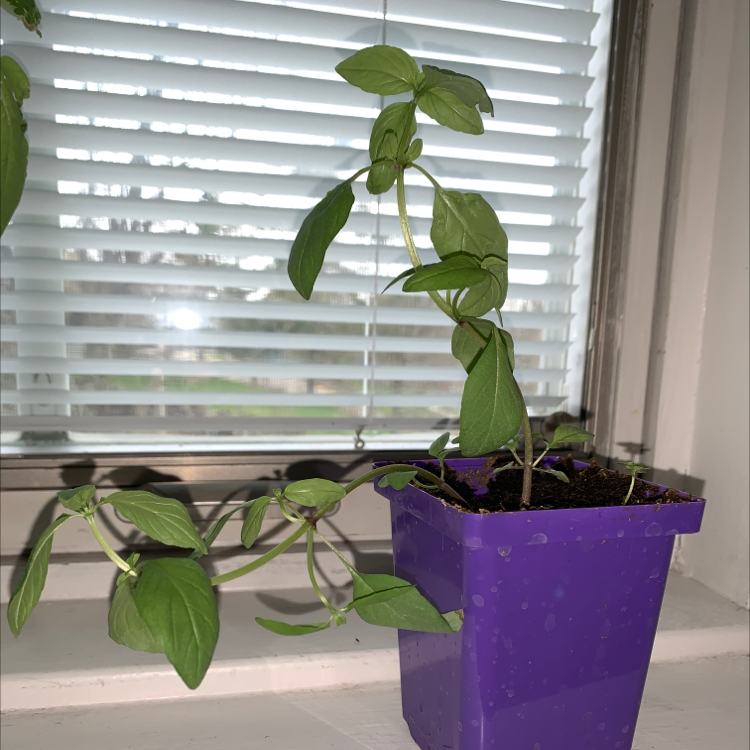
Holy Basil (Tulsi)

Best Soil for Holy Basil (Tulsi)

Ocimum tenuiflorum
Reviewed by Kiersten Rankel M.S.
Quick Answer
Holy Basil (Tulsi) grows best in well-draining, fertile loamy soil with a pH between 6.0 and 7.5. A quality potting mix enriched with compost gives it the nutrients it needs for dense, aromatic growth. Drainage matters most , soggy roots quickly cause stem rot and leaf drop.

What Soil Does Holy Basil Need?

Holy Basil (Ocimum tenuiflorum) is native to the tropical regions of Southeast Asia, where it grows in warm, well-drained soils with regular rainfall and strong sunshine. It's a fast-growing herb that pushes out new growth quickly when given fertile, loose soil that stays consistently moist without ever becoming waterlogged.

Stays wet
Damp
Waterlogged wet & suffocating
Damp & Airy moisture + oxygen
Compacted dense & dry
Gritty & Fast drains in seconds
Holy Basil (Tulsi)
Regular Potting Soil
Airy
Dries quickly

Holy Basil has an upright, branching growth habit with a relatively fibrous, moderately deep root system compared to other basil varieties. It needs soil that holds steady moisture , it wilts quickly when the soil dries out completely , but the roots must never sit in standing water. A loamy, well-draining mix with a good proportion of organic matter hits the right balance.

In containers, a high-quality potting mix enriched with 20โ€“30% compost works well. The compost provides both slow-release nutrients and improved moisture retention without making the mix heavy or dense. Avoid mixes that are mostly peat alone, as they can become hydrophobic when dry and make it hard to rewet the root zone evenly.

Holy Basil is a fast grower when conditions are right, and it benefits from a soil that can support regular harvesting. Unlike Mediterranean basils that thrive in lean, dry conditions, Tulsi appreciates a bit more organic richness in the mix. Adding a small amount of compost or worm castings at planting gives it a strong nutritional foundation without over-fertilizing.

What Soil Mix Should I Use for My Holy Basil?

Recommended Mix
Potting soil 50%
Compost or worm castings 30%
Perlite 15%
Coconut coir 5%
Stay on top of plant care
Get seasonal reminders for watering and fertilizing โ€” personalized for your plants.
Try Greg Free

What pH Does My Holy Basil Need?

Holy Basil prefers a pH between 6.0 and 7.5, which is slightly broader and more toward neutral or mildly alkaline than many herbs. This reflects its origin in the warm soils of tropical Asia, where pH tends toward neutral. You can check your mix with a basic soil pH meter or test strips , test moistened soil about 2 inches deep for an accurate reading.

When pH drops below 5.5, the soil becomes too acidic and nutrient absorption slows , you'll see pale, yellowing leaves and stunted growth. Above 8.0, the soil becomes too alkaline and iron and manganese are locked out, leading to chlorosis between the leaf veins. Most good-quality potting mixes start in the ideal range, but if you're using tap water with high alkalinity, pH can drift upward over a growing season.

Ideal pH Range
Ideal range 6.0โ€“7.5
Tolerable range 5.5โ€“8.0
To lower pH Mix in peat moss or use an acidic liquid fertilizer
To raise pH Add a small amount of garden lime or wood ash

When Should I Replace My Holy Basil's Soil?

Holy Basil is typically grown as an annual or short-lived perennial (in zones 10aโ€“11b where it can overwinter). For annual growing, start with fresh potting mix each season , the plant grows fast enough to exhaust available nutrients by the end of a summer growing cycle, and reused container soil tends to compact and drain poorly.

If you're overwintering Holy Basil indoors in a warm climate, repot in late winter with fresh mix to give it a nutritional reset before spring growth begins. The mix breaks down over the course of a season, and old potting soil becomes less effective at holding moisture evenly. Keeping fresh soil in place for this fast grower makes a noticeable difference in leaf density and essential oil content.

Signs Your Soil Needs Replacing
Soil feels dense and compacted when probed with a finger
Water drains sluggishly or pools at the surface
Leaves are pale or yellowing despite regular watering
Growth has slowed significantly by mid-season
Roots are visible at or circling the bottom of the pot

How Do I Prepare Garden Soil for Holy Basil?

Holy Basil is native to Southeast Asia and thrives in warm, well-drained soil with moderate fertility. Its roots do not like sitting in water, but they also do not want bone-dry ground.

For clay soil, work in compost and coarse sand to improve drainage and prevent the roots from staying too wet after rain. Sandy soil will benefit from compost and a light mulch to help retain moisture and nutrients. A full-sun spot with loose, slightly moist soil will have your Holy Basil growing vigorously and producing plenty of aromatic leaves.


Got More Questions?

Can I use regular potting soil for Holy Basil?
Yes, but enrich it with about 25โ€“30% compost. Plain potting mix doesn't have enough nutrients for Tulsi's fast growth. Worm castings are a great addition , just a few tablespoons mixed into the top few inches of soil at planting makes a difference.
Do I need to sterilize my soil?
Commercial potting mix doesn't need sterilization. If you're using garden soil in a container, pasteurize it first by baking at 160ยฐF for 30 minutes , this prevents damping off in seedlings, which is a common problem with unsterilized soil.
Why does my Holy Basil wilt even when the soil is moist?
Wilting in moist soil usually points to root rot from waterlogged conditions, or occasionally to fusarium wilt, a soil-borne fungal disease. Check that your container drains freely and that the mix isn't staying soggy after watering. If roots are brown and mushy, the plant has root rot and will need to be replaced with a fresh plant in clean soil.
Can I reuse last year's basil container soil?
It's not ideal. Used potting mix has depleted nutrients, compacted structure, and potentially harbors fungal spores. For a fast-growing herb like Tulsi that you're relying on for regular harvests, starting with fresh mix each season is worth the small cost.
How often should I fertilize Holy Basil in a container?
If your mix includes compost, you may not need to fertilize for the first 6โ€“8 weeks. After that, a balanced liquid fertilizer every 2โ€“3 weeks during the growing season keeps leaves dense and fragrant. Avoid over-fertilizing with high nitrogen, which promotes leafy growth but can dilute the essential oils that give Tulsi its distinctive scent.
Stay on top of plant care
Get seasonal reminders for watering and fertilizing โ€” personalized for your plants.
Try Greg Free

About This Article

Kiersten Rankel M.S.
Botanical Data Lead at Greg ยท Plant Scientist
About the Author
Kiersten Rankel holds an M.S. in Ecology & Evolutionary Biology from Tulane University. A certified Louisiana Master Naturalist, she has over a decade of experience in science communication, with research spanning corals, cypress trees, marsh grasses, and more. At Greg, she curates species data and verifies care recommendations against botanical research.
See Kiersten Rankel's full background on LinkedIn.
Editorial Process
Soil recommendations verified against Ocimum tenuiflorum growth data from Greg's botanical database, cross-referenced with USDA hardiness zone data and published horticultural research.
1,046+ Greg users growing this plant
USDA hardiness zones 10aโ€“11b