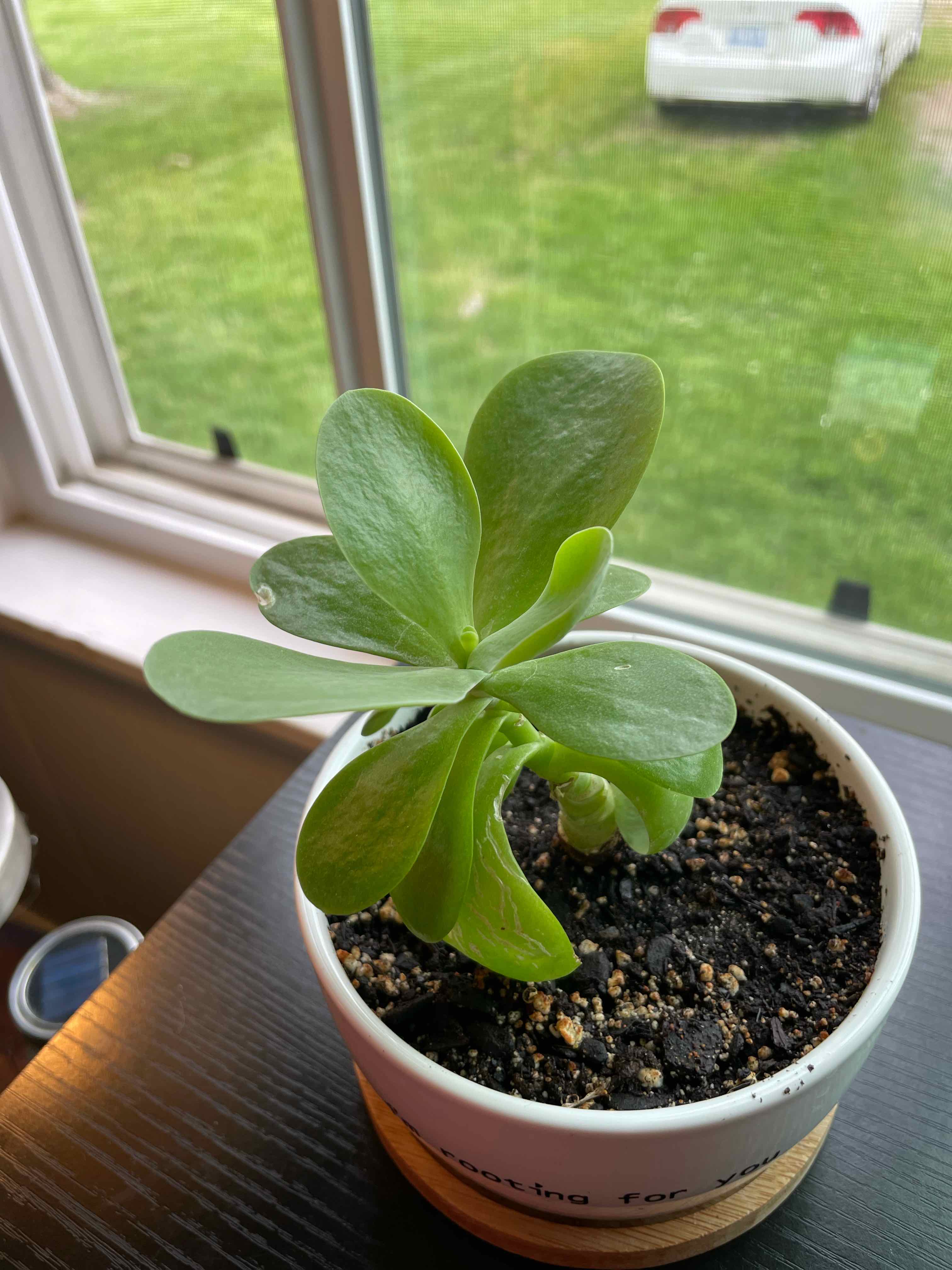
What's Wrong with My Flapjacks?

Common Flapjacks Problems
Green leaves, no color
Flapjacks develops its red and orange leaf edges as a response to intense sun. That color is a stress pigment, not a sign of a sick plant. Without strong direct light, the leaves stay flat green and the paddle shape becomes less dramatic.
Mushy leaves
Flapjacks' big paddle-shaped leaves are packed with water-storing cells. Wet soil keeps pushing water into them until they burst from the inside, turning the bottom row soft and glassy first. If the rot reaches the main stem, the whole plant collapses fast.
Shriveled leaves
When Flapjacks runs out of water reserves, the paddles pucker and go soft. The leaves lose their firmness and the paddle edges may curl slightly inward. Recovery is fast once the plant drinks.
If they don't plump up after watering, check the roots. Rot from overwatering can look exactly like thirst from above.
Spots on leaves
Flapjacks leaves have a fine powdery coating that water droplets damage on contact, leaving brown or translucent spots. The wide, upward-facing paddles catch overhead watering easily, and the marks are permanent once they form.
Flapjacks is native to warm parts of South Africa and the large paddle leaves are sensitive to cold. Temperatures below 30°F (-1°C) cause water in the leaf cells to freeze and rupture, leaving sunken, translucent or dark patches that dry out and scar.
Whole plant collapsing after bloom
Flapjacks is monocarpic, meaning the main rosette flowers once and then dies. This is completely normal. The tall flower spike appears on a mature plant after several years, and once flowering is done, that rosette will gradually decline. The plant almost always produces offsets (pups) from the base before this happens, and those pups are the continuation of the plant.
Pests
White cottony clumps tucked where the paddle leaves meet the stem. Flapjacks' tightly stacked leaf arrangement gives mealybugs good cover, and colonies can build up before becoming obvious.
When Flapjacks sends up its tall flower spike, aphids often move in fast. They cluster on the stalk and developing flower buds, sucking sap and leaving sticky honeydew. The flower spike is the most common place to find them.
Preventing Flapjacks Problems
About This Article
