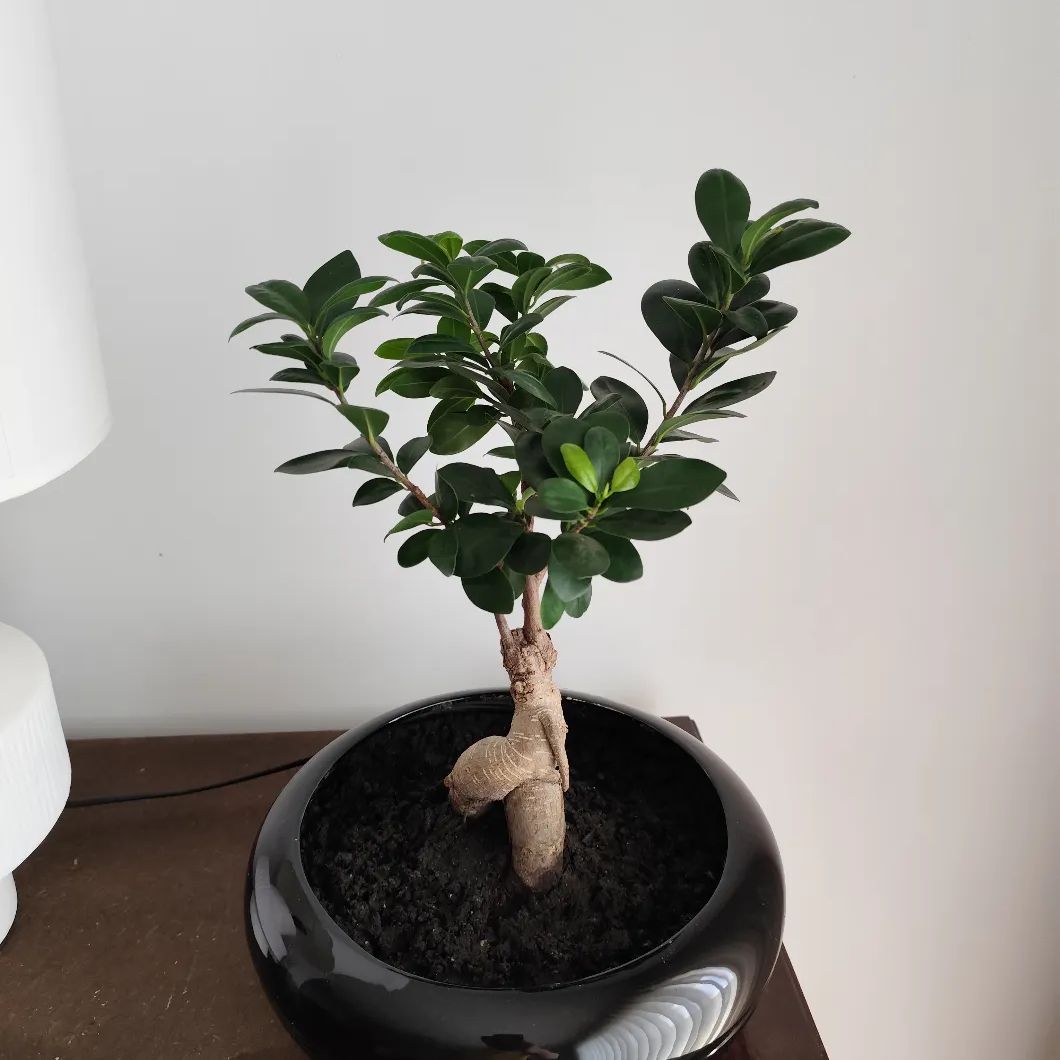
Ficus Ginseng

How to Fertilize Ficus Ginseng

Ficus microcarpa
Reviewed by Kiersten Rankel M.S.
Quick Answer
Feed Ficus Ginseng with a balanced fertilizer (10-10-10) at half strength every two weeks in spring and summer. Taper in fall and stop for winter.

When Should I Start Feeding My Ficus Ginseng?

Ficus Ginseng is hardy in zones 9a through 11b and, as a tropical species grown almost exclusively indoors, its feeding season tracks the natural increase in daylight from late winter onward.

US feeding regions map
Pacific Feb–Oct
Mountain May–Sep
Midwest Apr–Sep
Northeast Apr–Sep
Southeast Mar–Oct
Stay on top of plant care
Get seasonal reminders for watering and fertilizing — personalized for your plants.
Try Greg Free

How Often Should I Fertilize My Ficus Ginseng?

Feed every two weeks from spring through late summer at half strength. Ficus Ginseng is a moderate grower that puts out flushes of small leaves during the warm months.

Reduce to once a month in early fall. Stop feeding entirely from November through February, even if the plant is in a warm room. Reduced winter light means the plant cannot use extra nutrients.

Leaf yellowing followed by drop is usually a watering issue, but if the soil smells salty or you see white crust on the surface, you may be over-fertilizing. Flush the soil and skip the next two feedings.

Feeding Calendar
Spring & Summer
Half-strength balanced liquid every 2 weeks
Early Fall
Half-strength monthly
Late Fall & Winter
No feeding

What Is the Best Fertilizer for Ficus Ginseng?

Ficus Ginseng does well with a balanced liquid fertilizer in a ratio like 10-10-10 or 7-9-5, diluted to half strength. A balanced formula supports both the thick aerial roots this plant is known for and its dense canopy of small leaves.

Liquid fertilizer is ideal because Ficus Ginseng is usually grown in a small, shallow pot with limited soil volume. Liquid feeds distribute evenly and wash through before salts can concentrate around the roots.

If you grow your Ficus Ginseng as a bonsai, some growers prefer a dedicated bonsai fertilizer. These are simply balanced formulas in lower concentrations, so a standard houseplant fertilizer at half strength works just as well.

Synthetic
Balanced, highly soluble formula. Use 1/4 teaspoon per gallon for half-strength feeding in small Ficus Ginseng pots.
Complete liquid formula with all 16 essential nutrients. Slightly higher nitrogen supports the dense leaf canopy. Mix 1/8 tsp per gallon.
Organic
Gentle organic liquid with mycorrhizae. Low salt index is ideal for the shallow pots Ficus Ginseng typically grows in.
Sprinkle a thin layer on the soil surface every couple of months. Nutrients release gently each time you water.

How Do I Fertilize My Ficus Ginseng?

1
Water the soil first
Water your Ficus Ginseng thoroughly until water runs from the drainage holes. Wait about an hour before fertilizing so the roots are moist but not sitting in standing water.
2
Dilute to half strength
Mix your balanced liquid fertilizer at half the label rate. For most concentrates, that is roughly 1/4 teaspoon per gallon.
3
Pour slowly around the base
Apply the diluted fertilizer to the soil in a slow circle around the trunk. Ficus Ginseng pots are often shallow, so pour gently to avoid washing soil away from the exposed roots.
4
Let it drain completely
Allow all excess to flow out the drainage holes. Empty the saucer after 15 minutes. Small pots concentrate salts quickly, so good drainage is important.
5
Check the aerial roots
If the thick, exposed roots look dry or shriveled after feeding, mist them lightly with plain water. Healthy aerial roots should feel firm, not spongy.

Got More Questions?

Can I use coffee grounds on my Ficus Ginseng?
Used coffee grounds are mildly acidic and can help lower soil pH slightly, which Ficus Ginseng tolerates. But they compact easily in small pots and can trap moisture. A proper liquid fertilizer is more reliable.
What happens if I over-fertilize my Ficus Ginseng?
You will usually see white salt crust on the soil and browning leaf edges. In severe cases, the plant drops leaves. Flush the pot with plain water until it runs clear and skip feeding for a month.
My Ficus Ginseng is losing leaves. Should I fertilize more?
Leaf drop in Ficus Ginseng is almost always caused by a change in light or watering, not hunger. Check those first. Adding more fertilizer to a stressed plant usually makes things worse.
Should I use bonsai fertilizer for Ficus Ginseng?
You can, but it is not necessary. Bonsai fertilizers are just balanced formulas at lower concentrations. A standard houseplant fertilizer diluted to half strength gives you the same result for less money.
Do I need to fertilize a newly purchased Ficus Ginseng?
Wait at least four weeks. Nurseries typically pot these with slow-release fertilizer already in the soil. Feeding too soon can double up the dose and burn the roots.
Stay on top of plant care
Get seasonal reminders for watering and fertilizing — personalized for your plants.
Try Greg Free

About This Article

Kiersten Rankel M.S.
Botanical Data Lead at Greg · Plant Scientist
About the Author
Kiersten Rankel holds an M.S. in Ecology & Evolutionary Biology from Tulane University. A certified Louisiana Master Naturalist, she has over a decade of experience in science communication, with research spanning corals, cypress trees, marsh grasses, and more. At Greg, she curates species data and verifies care recommendations against botanical research.
See Kiersten Rankel's full background on LinkedIn.
Editorial Process
Fertilizer recommendations verified against Ficus microcarpa growth data from Greg's botanical database, cross-referenced with USDA hardiness zone data and published horticultural research.
18,769+ Greg users growing this plant
USDA hardiness zones 9a–11b