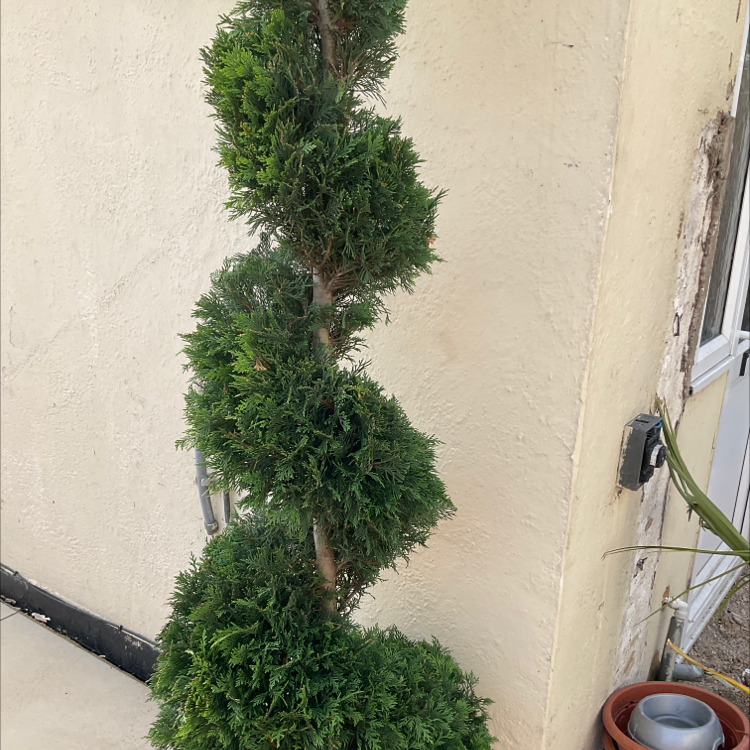
Arborvitae

How to Fertilize Emerald Green Arborvitae

Thuja occidentalis
Reviewed by Kiersten Rankel M.S.
Quick Answer
Use a slow-release granular fertilizer formulated for evergreens with an NPK ratio around 10-8-6 or 12-6-4. Apply once in early spring as new growth begins. A second light feeding in early summer is optional for younger trees.

When Should I Start Feeding My Emerald Green Arborvitae?

Emerald Green Arborvitae grows across zones 2a–7b, so the ideal feeding window varies significantly by region and local frost dates.

US feeding regions map
Pacific Feb–Jun
Mountain May–Jun
Midwest Apr–Jun
Northeast Apr–Jun
Southeast Mar–Jun
Stay on top of plant care
Get seasonal reminders for watering and fertilizing — personalized for your plants.
Try Greg Free

How Often Should I Fertilize My Emerald Green Arborvitae?

One application in early spring is all an established Emerald Green Arborvitae needs. Apply when you see fresh light-green growth appearing at the branch tips, typically March or April depending on your region.

Younger trees (first 2-3 years after planting) benefit from a second lighter application in early June. Established trees older than 3 years usually get enough nutrients from a single spring feeding plus whatever organic matter breaks down naturally in the soil.

Never fertilize after mid-July. Late feeding stimulates tender new growth that won't harden off before frost, leading to winter browning and dieback on the branch tips.

Feeding Calendar
Spring
Full application of slow-release evergreen fertilizer at label rate
Early Summer
Optional half-rate application for young trees only
Mid-Summer through Winter
No feeding

What Is the Best Fertilizer for Emerald Green Arborvitae?

A slow-release granular fertilizer designed for evergreens is the best choice for Emerald Green Arborvitae. Look for an NPK ratio like 10-8-6 or 12-6-4 with added sulfur or iron, which supports the deep green color this cultivar is prized for.

Granular slow-release formulas are ideal because they feed steadily over 2-3 months, matching the arborvitae's moderate growth pace. Liquid fertilizers work for container-grown specimens, but in-ground trees do better with granules worked into the soil around the drip line.

Avoid high-nitrogen lawn fertilizers, which push soft, leggy growth that's vulnerable to winter burn and pest damage. Arborvitae need steady, balanced nutrition rather than growth spurts.

Synthetic
Convenient pre-measured spikes you push into the ground around the drip line. One application feeds for about 2 months.
Slow-release granular with micronutrients. Apply once in early spring and water in. The higher nitrogen supports dense foliage growth.
Organic
Organic slow-release granular formulated for evergreens and acid-loving plants. Apply 1 cup per foot of branch spread in early spring.
Spread a half-inch layer around the drip line and scratch into the mulch. Provides slow, gentle nutrition and improves soil biology over time.
Slow-release organic granular that won't burn. Apply at label rate in spring. Adds iron, which helps maintain rich green foliage color.

How Do I Fertilize My Emerald Green Arborvitae?

1
Water the root zone the day before
Give the area around your arborvitae a deep soaking the day before fertilizing. Moist soil helps the granules dissolve evenly and protects roots from fertilizer burn.
2
Measure the fertilizer
Follow the label rate for your slow-release evergreen fertilizer. For most granular products, this is about 1 cup per inch of trunk diameter or per the tree's height in feet.
3
Spread granules around the drip line
Scatter the fertilizer in a ring from 6 inches away from the trunk out to the branch drip line. Keep granules off the foliage and away from the trunk base to prevent burn.
4
Scratch into the top inch of soil
Use a hand rake to gently work the granules into the top inch of soil or mulch. This prevents them from washing away in rain and helps them break down into the root zone.
5
Water thoroughly after applying
Give the area a good soaking to activate the slow-release coating and carry nutrients down to the roots. This also washes any stray granules off the foliage.

Got More Questions?

Can I use coffee grounds around my arborvitae?
In small amounts mixed into mulch, coffee grounds add nitrogen and slight acidity, which arborvitae tolerate. But don't pile them up thick. Concentrated coffee grounds can form a water-repellent mat and attract pests.
What happens if I over-fertilize my Emerald Green Arborvitae?
You'll see brown, scorched foliage tips and the inner needles may yellow and drop. In severe cases, entire branches can die back. Water deeply to flush excess salts from the root zone and skip feeding for the rest of the season.
Why is my arborvitae turning brown in winter?
Winter browning is usually caused by cold, drying winds, not a fertilizer issue. Late-season fertilizing makes it worse by pushing soft growth that can't withstand freezing. Make sure the tree is well-watered going into winter and stop feeding by midsummer.
Should I fertilize arborvitae at planting time?
Wait until the following spring. Freshly planted roots need time to establish before handling fertilizer salts. Water consistently during the first season instead.
Do mature arborvitae still need fertilizer?
Established trees older than 5 years often do fine without annual feeding, especially in decent soil. A soil test every few years tells you if anything is lacking. If the foliage is dense and deep green, the tree is getting what it needs.
Stay on top of plant care
Get seasonal reminders for watering and fertilizing — personalized for your plants.
Try Greg Free

About This Article

Kiersten Rankel M.S.
Botanical Data Lead at Greg · Plant Scientist
About the Author
Kiersten Rankel holds an M.S. in Ecology & Evolutionary Biology from Tulane University. A certified Louisiana Master Naturalist, she has over a decade of experience in science communication, with research spanning corals, cypress trees, marsh grasses, and more. At Greg, she curates species data and verifies care recommendations against botanical research.
See Kiersten Rankel's full background on LinkedIn.
Editorial Process
Fertilizer recommendations verified against Thuja occidentalis growth data from Greg's botanical database, cross-referenced with USDA hardiness zone data and published horticultural research.
940+ Greg users growing this plant
USDA hardiness zones 2a–7b