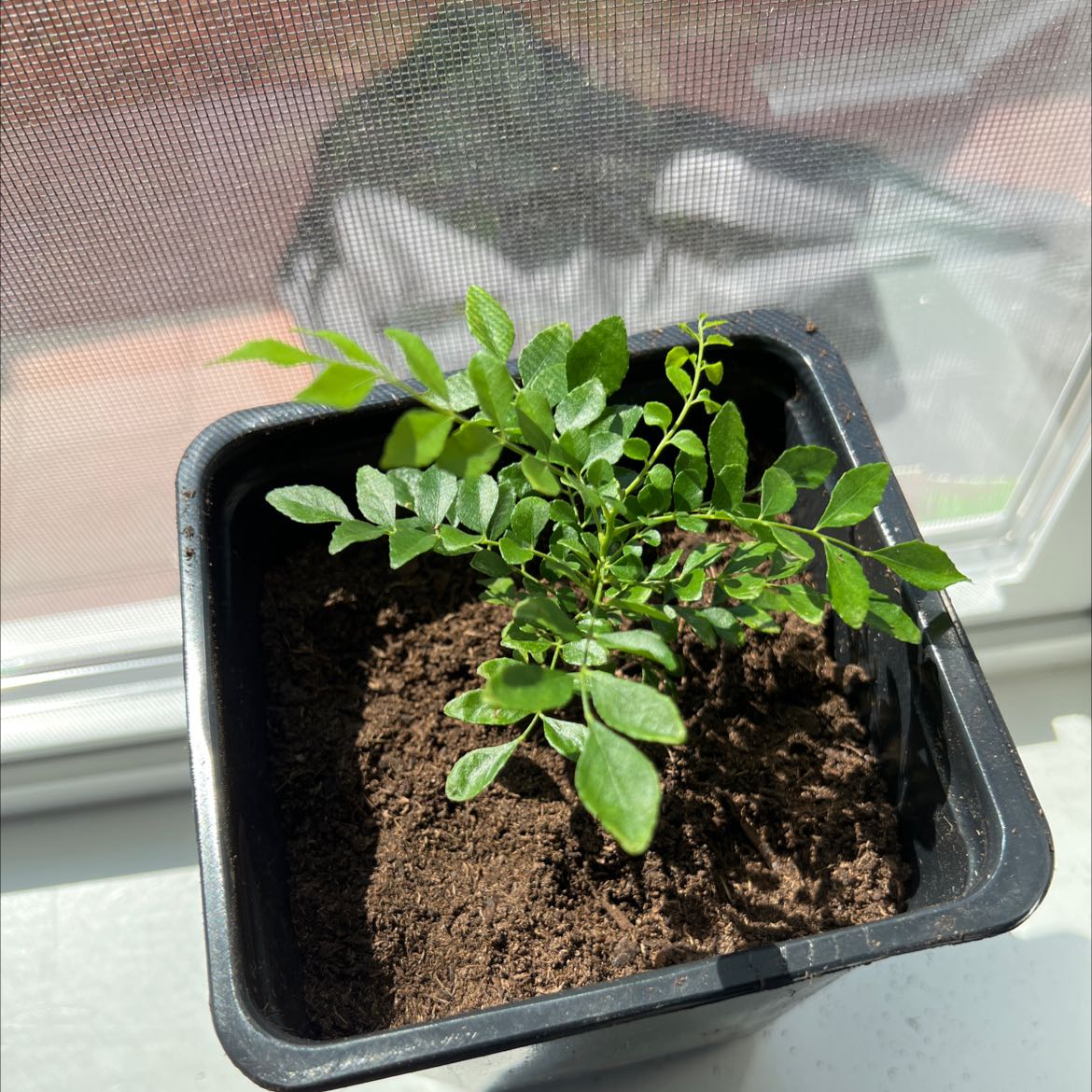
Curry Tree

How to Fertilize Curry Tree

Murraya koenigii
Reviewed by Kiersten Rankel M.S.
Quick Answer
Use a nitrogen-rich fertilizer (like fish emulsion 5-1-1 or a balanced 10-10-10) every two weeks during spring and summer. Curry Trees are heavy feeders that also benefit from iron supplements. Reduce feeding in fall and stop in winter.

When Should I Start Feeding My Curry Tree?

Curry Trees break dormancy when temperatures consistently stay above 60 degrees Fahrenheit, so your feeding start date depends on when spring warmth arrives in your region.

US feeding regions map
Pacific Mar–Oct
Mountain May–Sep
Midwest May–Sep
Northeast May–Sep
Southeast Mar–Oct
Stay on top of plant care
Get seasonal reminders for watering and fertilizing — personalized for your plants.
Try Greg Free

How Often Should I Fertilize My Curry Tree?

Feed every two weeks during the active growing season from spring through early fall. Curry Trees push out a lot of new leaf growth when conditions are warm, and they need consistent nutrition to keep producing.

Taper to monthly feeding in early fall, then stop entirely when the tree goes semi-dormant in winter. If your tree drops leaves in winter, that's normal, and fertilizing won't prevent it.

For indoor Curry Trees under grow lights, you can continue light monthly feeding through winter if the plant is still actively growing.

Feeding Calendar
Spring & Summer
Full-strength balanced liquid or fish emulsion every 2 weeks
Early Fall
Monthly feeding at half strength, tapering off
Late Fall & Winter
No feeding (tree is dormant or semi-dormant)

What Is the Best Fertilizer for Curry Tree?

Curry Trees are foliage plants grown for their aromatic leaves, so they need a fertilizer with strong nitrogen content. A formula like 10-10-10 or fish emulsion 5-1-1 works well for regular feedings.

Iron deficiency is common in Curry Trees, especially in alkaline soil. If the newer leaves turn yellow while the veins stay green, add a chelated iron supplement once a month during the growing season.

Curry Trees also respond well to a seaweed or kelp extract as a supplement. These provide trace minerals that support overall leaf health and fragrance.

Synthetic
Complete liquid formula with all 16 essential nutrients including iron. Mix 1/4 teaspoon per gallon for regular feeding.
High-nitrogen formula that promotes lush leaf growth. Mix 1 tablespoon per gallon every two weeks.
Organic
Classic nitrogen-rich organic fertilizer. Mix 1 tablespoon per gallon every two weeks. The smell fades quickly outdoors.
Granular organic blend with extra iron, formulated for subtropical trees. Work into soil surface every 6 to 8 weeks.
Top-dress with a 1-inch layer in spring for slow-release nutrition and improved soil biology.

How Do I Fertilize My Curry Tree?

1
Water your tree thoroughly first
Give the soil a deep soaking and let it drain before applying fertilizer. This protects the roots and helps the nutrients distribute evenly.
2
Mix fertilizer at full strength
Curry Trees are heavy feeders and can handle full-strength liquid fertilizer during active growth. Use a balanced 10-10-10 or nitrogen-rich formula like fish emulsion.
3
Apply around the drip line
Pour the solution onto the soil in a ring around the base, a few inches away from the trunk. This targets the feeder roots where absorption is best.
4
Add iron if leaves yellow
If new growth shows yellowing between green veins, apply a chelated iron supplement according to the package directions. This is common in alkaline soil or hard water areas.
5
Supplement with seaweed extract monthly
A kelp or seaweed spray applied to the leaves once a month provides trace minerals that support strong, fragrant foliage.

Got More Questions?

Can I use coffee grounds on my Curry Tree?
Curry Trees prefer slightly acidic soil, so small amounts of composted coffee grounds are fine. Don't pile them on fresh, as they can form a water-repelling mat and invite mold.
What happens if I over-fertilize my Curry Tree?
You'll see brown, burnt leaf edges and possibly leaf drop. Flush the soil with plain water several times and skip feeding for a month. The tree usually recovers once the excess salts are washed away.
Why are the new leaves on my Curry Tree yellow?
Yellowing new leaves with green veins is a classic sign of iron deficiency. Apply a chelated iron supplement and check if your water is very hard or alkaline.
Should I fertilize my Curry Tree in winter?
Generally no. Curry Trees go semi-dormant and may drop leaves in winter. If your tree is indoors under grow lights and actively growing, a light monthly feeding is fine.
Does my Curry Tree need special fertilizer since I eat the leaves?
Use food-safe organic fertilizers like fish emulsion or compost if you harvest the leaves for cooking. Rinse harvested leaves well regardless of what fertilizer you use.
Stay on top of plant care
Get seasonal reminders for watering and fertilizing — personalized for your plants.
Try Greg Free

About This Article

Kiersten Rankel M.S.
Botanical Data Lead at Greg · Plant Scientist
About the Author
Kiersten Rankel holds an M.S. in Ecology & Evolutionary Biology from Tulane University. A certified Louisiana Master Naturalist, she has over a decade of experience in science communication, with research spanning corals, cypress trees, marsh grasses, and more. At Greg, she curates species data and verifies care recommendations against botanical research.
See Kiersten Rankel's full background on LinkedIn.
Editorial Process
Fertilizer recommendations verified against Murraya koenigii growth data from Greg's botanical database, cross-referenced with USDA hardiness zone data and published horticultural research.
1,188+ Greg users growing this plant
USDA hardiness zones 9a–11b