What's Wrong with My Crocodile Fern?

Common Crocodile Fern Problems
Brown crispy edges
Crocodile Fern grows as an epiphyte on tree trunks in humid Southeast Asian rainforests, where moisture in the air is nearly constant. Its wide, leathery fronds are more tolerant of drying out than softer ferns, but the edges still lose moisture and brown when indoor humidity drops below 40-50%. The crispy damage runs along the frond margins first and won't heal even if humidity improves later.
The textured fronds of Crocodile Fern are sensitive to fluoride and salt buildup from tap water. Minerals accumulate in the leaf tissue over time and cause brown tips and crispy edges that look like humidity damage but persist even when humidity improves. The browning tends to appear at frond tips and along edges in irregular patches.
Yellow fronds
Crocodile Fern grows on bark in the wild, so its roots are adapted to periods of moisture followed by drying out rather than sitting in wet substrate. Waterlogged soil suffocates the roots and causes them to rot. As the roots fail, the plant pulls nutrients from older outer fronds first, turning them yellow before the damage moves inward.
Crocodile Fern lives in the filtered shade of a rainforest canopy in the wild. Direct sun bleaches its normally dark green, patterned fronds to a washed-out yellow-green and can scorch pale patches into the surface within hours. The yellowing and bleaching often shows up first on the fronds facing the light source.
Wilting fronds
Crocodile Fern's leathery fronds tolerate some drying out better than softer ferns, but when the bark-based substrate dries out completely, the fronds go limp and lose their upright posture. Unlike root rot wilting, these fronds usually firm back up within a few hours of a thorough watering.
Roots adapted to clinging to bark rot quickly when kept in dense, wet potting mix. Once roots fail, they cannot move water up into the fronds even when the substrate is soaked. The fronds go limp and stay limp after watering, which is the key sign distinguishing root rot from simple underwatering.
Faded pattern
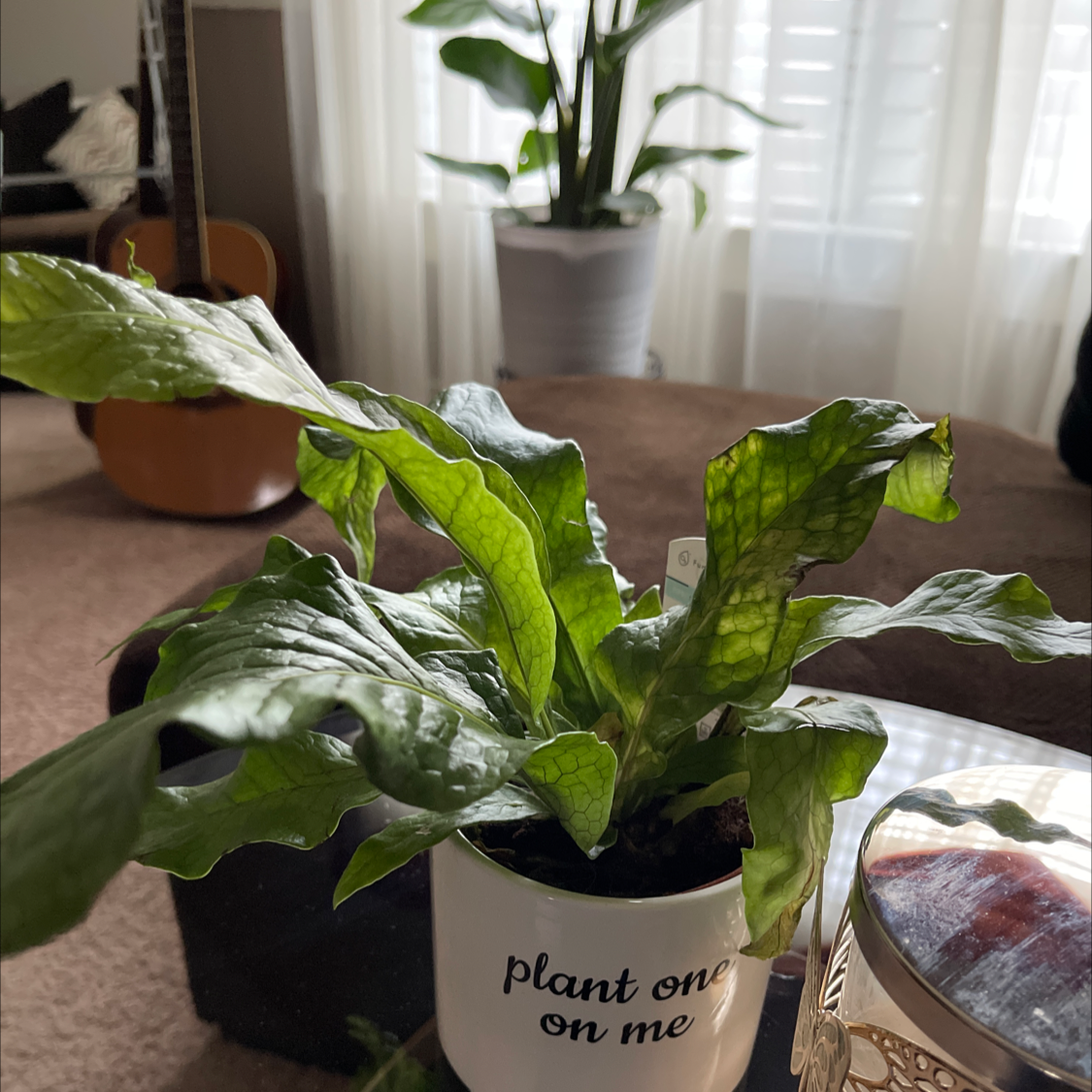
The raised ridge-and-groove texture is always crispest on fresh young fronds. As each frond matures, the ridges naturally soften and the pattern dulls across the blade. A plant that looks uniformly faded all over has probably gone a long stretch without pushing new fronds, and the crocodile texture has mellowed on every frond at once. The pattern is a feature of new growth, not a permanent quality of every leaf.
Pests
Small brown or tan waxy bumps appear along the prominent midrib running down each frond, or on the undersides near the frond base. The ridged texture of Crocodile Fern's fronds gives scale insects sheltered surfaces to anchor and feed, making them easy to miss until a frond starts declining.
Small black flies that hover around the substrate and lift off when you water. Crocodile Fern is often potted in bark-based mix that retains moisture pockets, and if kept too wet, the top layer becomes ideal for fungus gnat larvae to breed.
Preventing Crocodile Fern Problems
About This Article
