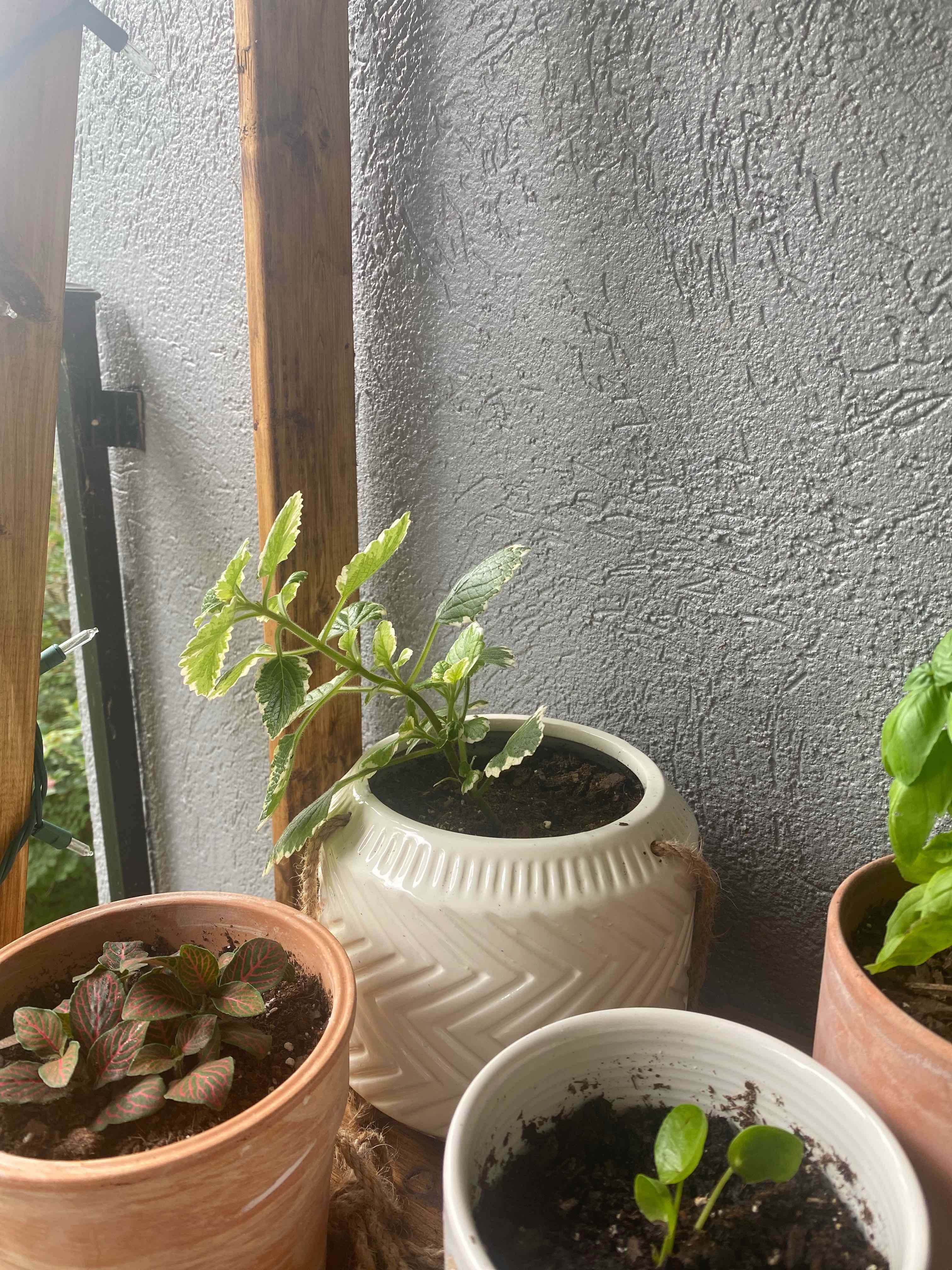
White-Edged Swedish Ivy

How to Fertilize White-Edged Swedish Ivy

Coleus paniculatus
Reviewed by Kiersten Rankel M.S.
Quick Answer
Use a balanced liquid fertilizer at half strength every two weeks from spring through summer. Taper to monthly in early fall and stop for winter.

When Should I Start Feeding My White-Edged Swedish Ivy?

Start feeding when you see new growth emerging in early spring, since this tropical plant follows seasonal light cycles even when grown indoors.

US feeding regions map
Pacific Feb–Nov
Mountain Apr–Sep
Midwest Apr–Oct
Northeast Apr–Oct
Southeast Mar–Nov
Stay on top of plant care
Get seasonal reminders for watering and fertilizing — personalized for your plants.
Try Greg Free

How Often Should I Fertilize My White-Edged Swedish Ivy?

Every two weeks during the active growing season (spring and summer) works well. This is a vigorous grower that puts out long trailing stems quickly and appreciates regular feeding to keep up.

Taper to once a month in early fall as light levels drop. Stop feeding entirely in winter when growth naturally slows.

If the white leaf margins start reverting to green, you may be feeding too much. Cut back to monthly and see if the variegation returns with the next flush of growth.

Feeding Calendar
Spring & Summer
Half-strength balanced liquid every 2 weeks
Early Fall
Half-strength balanced liquid monthly
Late Fall & Winter
No feeding

What Is the Best Fertilizer for White-Edged Swedish Ivy?

A balanced liquid fertilizer like 10-10-10 or 20-20-20 at half strength is ideal. White-Edged Swedish Ivy is grown for its attractive variegated foliage, so a formula with adequate nitrogen keeps the leaves full and healthy without pushing all the energy into plain green growth.

Liquid fertilizer gives you the most control with this fast-growing trailing plant. It is easy to adjust the dose if you notice the variegation fading (a sign of too much nitrogen) or the growth slowing down.

Avoid heavy, slow-release granular fertilizers in hanging baskets. They can concentrate in the limited soil volume and burn the shallow root system.

Synthetic
Complete liquid formula with all 16 essential nutrients. The 3-1-2 ratio supports healthy foliage without pushing excess green growth. Mix 1/4 teaspoon per gallon.
Reliable balanced formula widely available at garden centers. Use 1/2 teaspoon per gallon for biweekly feeding.
Organic
Gentle all-in-one organic formula with beneficial microbes. One scoop per gallon of water every two weeks.
Mild organic liquid that feeds both the plant and the soil. Mix 1 tablespoon per gallon. Has a noticeable smell, so best used when you can ventilate.

How Do I Fertilize My White-Edged Swedish Ivy?

1
Water your plant first
Give the soil a thorough soaking and let it drain before applying fertilizer. This protects the shallow roots from concentrated salts.
2
Dilute to half strength
Mix your balanced liquid fertilizer at half the label rate. For a typical 20-20-20 concentrate, that is about 1/2 teaspoon per gallon of water.
3
Pour evenly over the soil surface
Apply the solution slowly across the entire surface of the pot. In a hanging basket, rotate the basket so the solution reaches all sides of the root ball.
4
Avoid getting fertilizer on the leaves
The soft, variegated leaves of White-Edged Swedish Ivy can spot or burn when fertilizer solution sits on them. Pour at the base and wipe off any splashes.
5
Flush the soil monthly
Once a month, water with plain water until it flows freely from the drainage holes. This washes out accumulated salts, which is especially important in the small pots this trailing plant is often grown in.

Got More Questions?

Will too much fertilizer make my White-Edged Swedish Ivy lose its variegation?
Yes. Excess nitrogen encourages the plant to produce more chlorophyll, which can cause the white leaf margins to revert to green. If you notice this happening, reduce feeding frequency and dose.
What happens if I over-fertilize my Swedish Ivy?
You will see brown, crispy leaf tips and edges, and the trailing stems may become leggy and weak. Flush the soil with plain water several times and skip feeding for a month.
Can I use coffee grounds on my White-Edged Swedish Ivy?
A small amount of used grounds mixed into the soil is fine occasionally. Avoid large amounts, as they compact easily in the small pots this plant is typically grown in and can retain too much moisture.
Should I fertilize my Swedish Ivy cuttings while they root?
No. Wait until cuttings have established roots and are showing new leaf growth, usually 4 to 6 weeks after rooting. Fertilizer on unrooted stems can cause rot.
Can I use banana peels for my Swedish Ivy?
Banana peels do not break down fast enough in potting soil to deliver useful nutrients. A dilute liquid fertilizer is more effective and easier to control for a fast-growing trailing plant.
Stay on top of plant care
Get seasonal reminders for watering and fertilizing — personalized for your plants.
Try Greg Free

About This Article

Kiersten Rankel M.S.
Botanical Data Lead at Greg · Plant Scientist
About the Author
Kiersten Rankel holds an M.S. in Ecology & Evolutionary Biology from Tulane University. A certified Louisiana Master Naturalist, she has over a decade of experience in science communication, with research spanning corals, cypress trees, marsh grasses, and more. At Greg, she curates species data and verifies care recommendations against botanical research.
See Kiersten Rankel's full background on LinkedIn.
Editorial Process
Fertilizer recommendations verified against Coleus paniculatus growth data from Greg's botanical database, cross-referenced with USDA hardiness zone data and published horticultural research.
121+ Greg users growing this plant
USDA hardiness zones 10a–12b