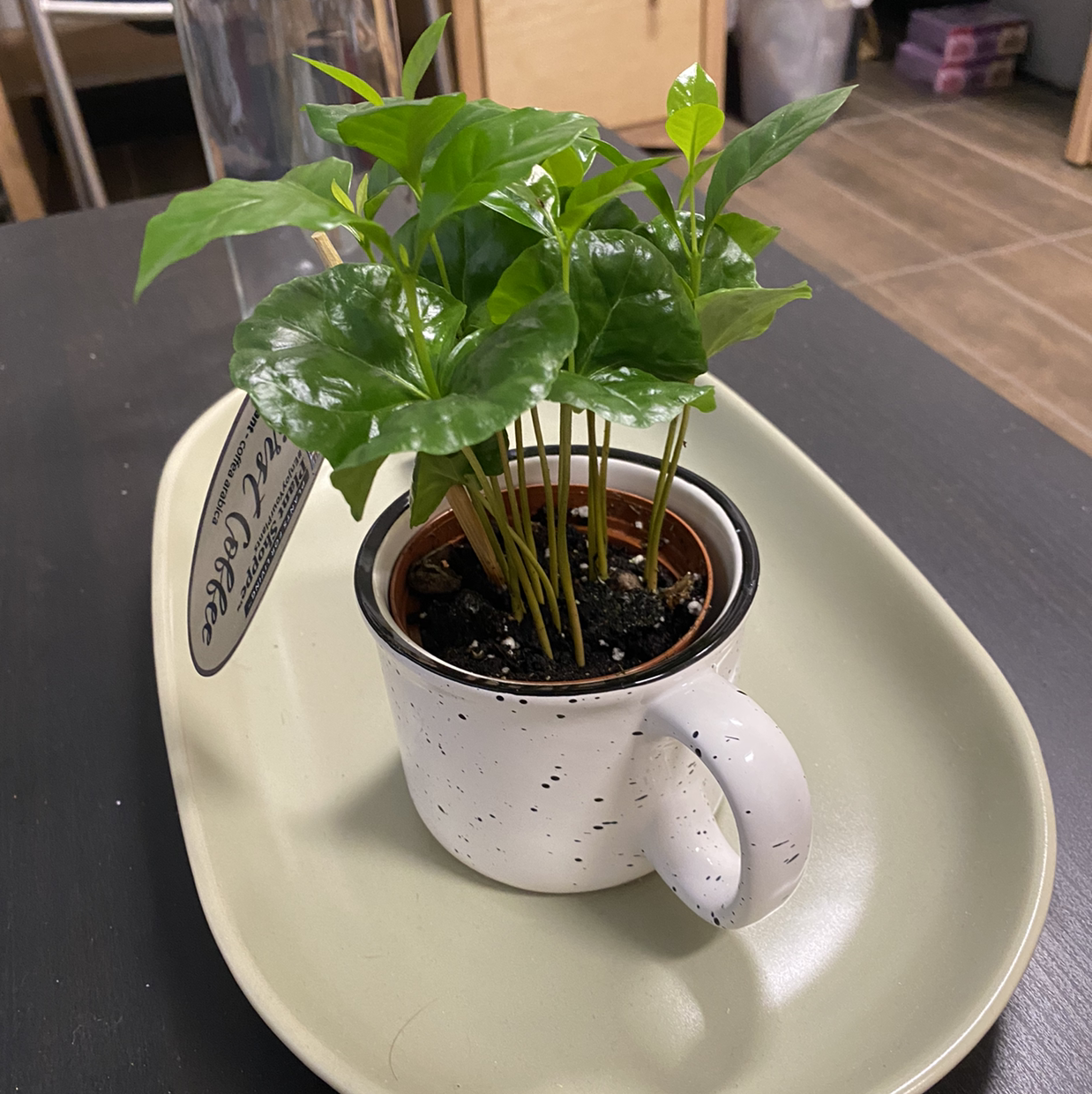
Arabian Coffee Plant

How to Fertilize Arabian Coffee Plant

Coffea arabica
Reviewed by Kiersten Rankel M.S.
Quick Answer
Use a balanced, slightly acidic fertilizer with a ratio like 10-10-10 or one formulated for acid-loving plants. Feed every two weeks during spring and summer. Reduce to monthly in fall and stop in winter.

When Should I Start Feeding My Arabian Coffee Plant?

Coffee Plants respond strongly to increasing daylight in spring, so begin feeding when you notice new leaf growth appearing at the branch tips.

US feeding regions map
Pacific Feb–Oct
Mountain Apr–Sep
Midwest Apr–Sep
Northeast Apr–Sep
Southeast Mar–Oct
Stay on top of plant care
Get seasonal reminders for watering and fertilizing — personalized for your plants.
Try Greg Free

How Often Should I Fertilize My Arabian Coffee Plant?

During the growing season (spring through summer), feed your Coffee Plant every two weeks with a half-strength liquid fertilizer. This plant is a relatively strong grower when conditions are right, and regular feeding supports dense, glossy foliage.

In early fall, reduce to once a month. Stop feeding in late fall and winter. Growth slows considerably during shorter days, and excess nutrients will accumulate in the soil.

If your Coffee Plant produces flowers (small, fragrant white blooms), continue your regular feeding schedule through the bloom period. Flower and fruit production requires significant energy.

Feeding Calendar
Spring
Half-strength liquid every 2 weeks
Summer
Half-strength liquid every 2 weeks
Early Fall
Half-strength liquid once a month
Late Fall & Winter
No feeding

What Is the Best Fertilizer for Arabian Coffee Plant?

Coffee Plants are acid-loving and moderately heavy feeders. A balanced fertilizer like 10-10-10 works well, but formulas designed for acid-loving plants (azalea or citrus fertilizers) are even better because they help maintain the low soil pH this plant prefers.

Liquid fertilizer at half strength every two weeks gives the most consistent results. Coffee Plants grow actively during warm months and appreciate a steady nutrient supply rather than infrequent heavy doses.

Iron is especially important for this species. If your plant's newer leaves turn yellow while the veins stay green, that's iron deficiency caused by soil pH creeping too high. An acidic fertilizer with iron prevents this common problem.

Synthetic
High-nitrogen acidic formula that keeps soil pH in the range Coffee Plants prefer. Mix at half the label rate for regular feeding.
Complete liquid formula with all 16 essential nutrients including iron. Mix 1/4 teaspoon per gallon.
Organic
Granular organic fertilizer for acid-loving plants. Sprinkle on the soil surface in early spring and midsummer. Contains beneficial soil microbes.
Organic liquid with high nitrogen and natural acidity. Dilute to half strength. Has a strong smell, so apply near an open window.

How Do I Fertilize My Arabian Coffee Plant?

1
Water your plant first
Give your Coffee Plant a good watering before fertilizing. Moist soil protects the roots and helps distribute nutrients evenly.
2
Dilute to half strength
Mix your liquid fertilizer at half the label rate. Coffee Plants are sensitive to salt buildup, so a lighter dose applied more frequently is safer than a strong dose.
3
Pour evenly across the soil
Apply the solution slowly across the entire soil surface. Try to cover all areas of the root zone rather than pouring in one spot.
4
Let excess drain away
Allow the solution to flow through the drainage holes freely. Coffee Plants like moist soil but not standing water, so empty the saucer after 15 minutes.
5
Watch for yellowing new leaves
If new leaves emerge yellow with green veins, the soil pH may be too high. Switch to an acidic fertilizer or add a small amount of iron supplement to your feeding routine.

Got More Questions?

Can I use coffee grounds on my Coffee Plant?
There's some poetic justice to the idea, and coffee grounds are mildly acidic which this plant likes. But used grounds have very little nitrogen left. A thin sprinkle on the soil surface occasionally is fine, but don't rely on them as your main fertilizer.
What happens if I over-fertilize my Coffee Plant?
Brown leaf tips and edges are the first warning. You may also see salt crust on the soil surface. Flush the pot thoroughly with plain water and skip feeding for 3-4 weeks before resuming at a lighter dose.
Why are my Coffee Plant's new leaves yellow?
Yellow new leaves with green veins is a classic sign of iron deficiency, which happens when soil pH gets too high. Switch to an acidic fertilizer, or add an iron supplement. This is the most common nutrient issue with indoor Coffee Plants.
Should I fertilize my Coffee Plant while it's flowering?
Yes. Flower and fruit production takes a lot of energy. Keep up your regular biweekly feeding schedule while the plant is blooming or producing berries.
Can I use banana peels as fertilizer for my Coffee Plant?
Banana peels decompose too slowly in a pot to provide meaningful nutrients. They're more likely to attract fungus gnats than to feed your plant. Stick with a proper liquid fertilizer for reliable results.
Stay on top of plant care
Get seasonal reminders for watering and fertilizing — personalized for your plants.
Try Greg Free

About This Article

Kiersten Rankel M.S.
Botanical Data Lead at Greg · Plant Scientist
About the Author
Kiersten Rankel holds an M.S. in Ecology & Evolutionary Biology from Tulane University. A certified Louisiana Master Naturalist, she has over a decade of experience in science communication, with research spanning corals, cypress trees, marsh grasses, and more. At Greg, she curates species data and verifies care recommendations against botanical research.
See Kiersten Rankel's full background on LinkedIn.
Editorial Process
Fertilizer recommendations verified against Coffea arabica growth data from Greg's botanical database, cross-referenced with USDA hardiness zone data and published horticultural research.
8,795+ Greg users growing this plant
USDA hardiness zones 10a–11b