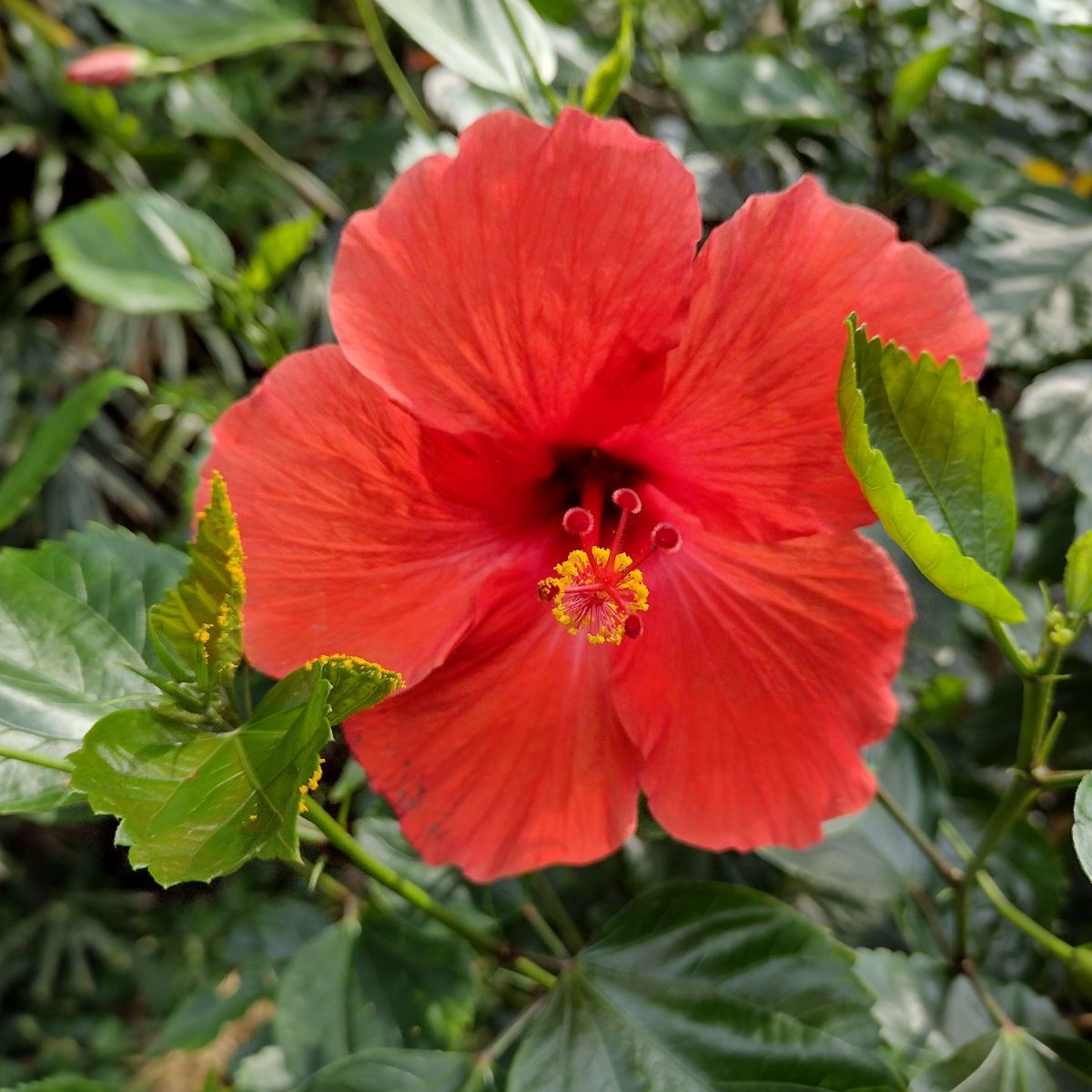
Best Soil for Chinese Hibiscus
What Soil Does a Chinese Hibiscus Need?
Chinese Hibiscus is a tropical flowering shrub from East Asia that produces large, showy blooms most of the year in warm climates. It grows up to 4 feet tall and wide and has a branching, woody root system that needs consistent moisture alongside good drainage. The soil should be rich enough to fuel continuous flowering without becoming dense or waterlogged.
Chinese Hibiscus is a heavy feeder and a consistent bloomer. The soil it grows in needs to do double duty: hold enough moisture to support large leaves and constant flowering, but drain well enough that roots never sit in standing water. Heavy, poorly draining soil is the primary cause of root rot in hibiscus, which shows up as sudden yellowing and leaf drop.
A quality all-purpose potting mix forms a good base, but most standard mixes benefit from 20–25% added perlite to improve drainage. Hibiscus roots are fibrous and spread broadly rather than deeply. They prefer a medium that keeps them moist between waterings but gives them room to breathe.
Compost is a valuable addition because it releases nutrients slowly as the plant draws on them through a long blooming season. Avoid using native garden soil in containers. It compacts quickly in a pot, drains poorly, and can introduce pests. For in-ground plants in zones 9a–11b, native soil amended with compost is usually sufficient as long as the site drains well.
What Soil Mix Should I Use for My Chinese Hibiscus?

What pH Does My Chinese Hibiscus Need?
Chinese Hibiscus prefers a slightly acidic to neutral pH of 6.0–7.0. Within this range, iron, magnesium, and the full suite of micronutrients needed for flower production are readily available. You can check your soil's pH with an inexpensive meter or test strips from a garden center.
When pH climbs above 7.0, iron becomes less available and you'll see yellowing between the leaf veins, particularly on young growth, while the veins themselves stay green. This is called iron chlorosis and is common in hibiscus grown in alkaline soils or watered with hard water over time. When pH drops below 5.5, nutrient availability also suffers and root function slows, causing pale leaves and reduced flowering.
When Should I Replace My Chinese Hibiscus's Soil?
Chinese Hibiscus is a moderate grower that can fill a container within a couple of growing seasons. Repot every 2 years in spring, moving up one pot size and replacing all the potting mix. Over time, potting soil breaks down and loses its structure, and salts from fertilizer and tap water accumulate and can burn roots.
For in-ground plants, top-dress around the root zone each spring with a 2-inch layer of compost. Work it in lightly to replenish nutrients consumed during the heavy-flowering season.
How Do I Prepare Garden Soil for Chinese Hibiscus?
Chinese Hibiscus is a hungry, fast-drinking plant that needs rich soil with good drainage. Its roots want steady access to moisture and nutrients without ever sitting in soggy ground, especially during heavy bloom periods.
Amend clay soil with compost, aged bark, and coarse sand to break up compaction and let water flow through. For sandy soil, work in a thick layer of compost and some well-rotted manure to add body and hold nutrients longer. A sunny planting spot with soil that feels crumbly and rich when you squeeze it is exactly what this plant needs to push out flowers all season.
Got More Questions?
About This Article
