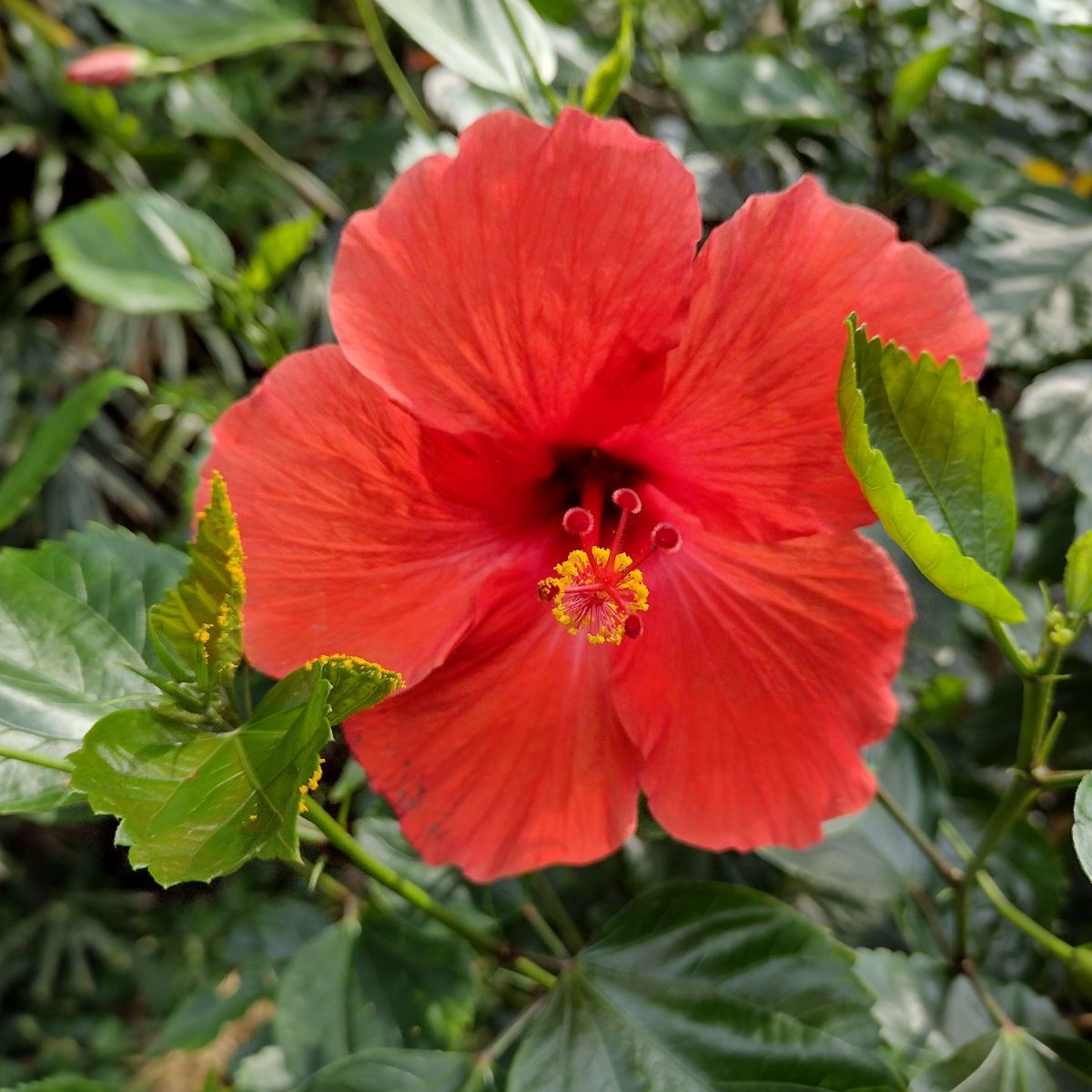
Chinese Hibiscus

How to Fertilize Chinese Hibiscus

Hibiscus rosa-sinensis
Reviewed by Kiersten Rankel M.S.
Quick Answer
Use a high-potassium fertilizer like 10-4-12 every one to two weeks during the growing season. Potassium fuels nonstop blooms. Taper in fall and stop in winter.

When Should I Start Feeding My Chinese Hibiscus?

Begin fertilizing in early spring when you see fresh new leaves emerging, adjusting the start date based on your region's last frost and whether the plant is growing in a pot or in the ground.

US feeding regions map
Pacific Feb–Nov
Mountain May–Sep
Midwest May–Sep
Northeast May–Sep
Southeast Mar–Oct
Stay on top of plant care
Get seasonal reminders for watering and fertilizing — personalized for your plants.
Try Greg Free

How Often Should I Fertilize My Chinese Hibiscus?

Feed once a week during the growing season for the most abundant blooms. If weekly feeding feels like a lot, biweekly at full strength works too, just expect fewer flowers.

Taper to once a month in early fall as the plant's growth slows and days get shorter. Stop feeding completely in winter when the plant is semi-dormant.

Over-fertilizing with nitrogen is the main risk. If your Hibiscus is producing lots of leaves but few flowers, switch to a formula with less nitrogen and more potassium.

Feeding Calendar
Spring & Summer
Full-strength liquid weekly or half-strength every watering
Early Fall
Monthly feeding at half strength
Late Fall & Winter
No feeding while growth is dormant

What Is the Best Fertilizer for Chinese Hibiscus?

Chinese Hibiscus performs best with a fertilizer that is high in potassium and moderate in nitrogen, such as a 10-4-12 or 17-5-24 hibiscus-specific formula. Potassium drives flower production, while moderate nitrogen keeps foliage dense without sacrificing blooms.

Liquid fertilizer is ideal because it delivers nutrients quickly to the fast-growing root system. Water-soluble powders work just as well. Avoid slow-release granules as the sole feeding method, since Hibiscus needs a steady, frequent supply during peak bloom.

Dilute to the label's recommended strength for weekly feeding, or use half strength if feeding every watering. These plants are heavy feeders that rarely suffer from too little fertilizer.

Synthetic
Specifically formulated for hibiscus with high potassium for bloom production. Apply every 2 weeks at the label rate.
High-phosphorus option for boosting flower count. Mix at half strength for weekly applications.
Organic
Gentle organic liquid with trace minerals that support continuous blooming. Mix 1 tablespoon per gallon weekly.
Granular organic with beneficial microbes. Use as a supplement alongside liquid feedings, applied monthly.

How Do I Fertilize My Chinese Hibiscus?

1
Water your plant first
Give your Chinese Hibiscus a thorough watering at least an hour before fertilizing. These plants need consistently moist soil, and pre-watering protects the roots from chemical burn.
2
Mix the fertilizer solution
Dissolve your water-soluble fertilizer at the label's recommended rate for weekly feeding. If you prefer to feed with every watering, cut the dose in half.
3
Apply to moist soil around the base
Pour the solution evenly around the root zone, working outward from the stem. For in-ground plants, cover the area under the canopy. Avoid splashing the leaves and flowers.
4
Check for bloom response
Within two to three weeks of regular feeding, you should see more flower buds forming. If the plant is pushing leaves instead, your fertilizer may have too much nitrogen.
5
Flush the soil every 4 to 6 weeks
Water deeply with plain water to wash out accumulated salts. Chinese Hibiscus is sensitive to salt buildup, which can cause leaf yellowing and bud drop.

Got More Questions?

Can I use coffee grounds on my Chinese Hibiscus?
Coffee grounds add a small amount of nitrogen and can slightly acidify the soil. Use them sparingly as a mulch supplement, but they cannot replace a high-potassium fertilizer that Hibiscus actually needs for flowering.
What happens if I over-fertilize my Chinese Hibiscus?
Too much nitrogen produces lush leaves and few blooms. Excess salts cause yellowing leaves and bud drop. Flush the soil with plain water several times and switch to a lower-nitrogen, higher-potassium formula.
Why is my Hibiscus growing leaves but not flowering?
This is almost always a nitrogen-to-potassium imbalance. If you are using a general-purpose fertilizer with high nitrogen, switch to a bloom-specific or hibiscus-specific formula with more potassium.
Should I fertilize a newly bought Chinese Hibiscus right away?
Wait two to three weeks to let the plant acclimate to its new environment. Most nursery plants come with slow-release fertilizer already in the soil, so feeding immediately can overload the roots.
Can I use banana peels to fertilize my Chinese Hibiscus?
Banana peels contain some potassium, but they decompose too slowly in soil to provide meaningful nutrition. A water-soluble fertilizer delivers the potassium your Hibiscus needs much more efficiently.
Stay on top of plant care
Get seasonal reminders for watering and fertilizing — personalized for your plants.
Try Greg Free

About This Article

Kiersten Rankel M.S.
Botanical Data Lead at Greg · Plant Scientist
About the Author
Kiersten Rankel holds an M.S. in Ecology & Evolutionary Biology from Tulane University. A certified Louisiana Master Naturalist, she has over a decade of experience in science communication, with research spanning corals, cypress trees, marsh grasses, and more. At Greg, she curates species data and verifies care recommendations against botanical research.
See Kiersten Rankel's full background on LinkedIn.
Editorial Process
Fertilizer recommendations verified against Hibiscus rosa-sinensis growth data from Greg's botanical database, cross-referenced with USDA hardiness zone data and published horticultural research.
10,504+ Greg users growing this plant
USDA hardiness zones 9a–11b