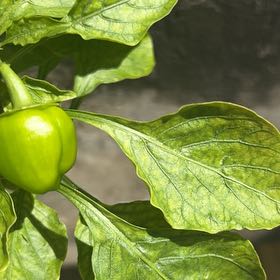
Pepper Plant

What's Eating Your Bell Pepper?

Capsicum annuum
Reviewed by Kiersten Rankel M.S.
Quick Answer

For bell peppers, the most likely culprits are aphids clustering on new growth (where they spread plant viruses) and thrips that vector tomato spotted wilt. Spider mites explode in hot dry summers and bronze the leaves. Pepper weevils are the iconic fruit-destroyer in the southern US. Hornworms strip whole branches overnight.

Stay on top of plant care
Get seasonal reminders for watering and fertilizing, personalized for your plants.
Try Greg Free

What does the damage look like?

Tap the closest match to jump straight to the fix.

Pests, ranked by impact

Dense colony of aphids clustered on a plant stem

Aphids

Damage
High
Removal
Easy
What it looks like

Tiny pear-shaped insects 1 to 3 mm long, in shades of green, black, or pale yellow. Cluster densely on the soft underside of young leaves and along new growth tips at the bushy crown of the plant. Often hide where the leaf petiole meets the stem.

What the damage looks like

New leaves curl, twist, and yellow as aphids drain sap. A sticky shiny film coats leaves and the soil below. Worst of all, aphids vector cucumber mosaic virus and pepper mottle virus, which permanently stunt the plant and ruin fruit set for the season.

How to get rid of them
Option 1

Strong water blast every 2 to 3 days for 2 weeks

Hold a hose nozzle 12 inches from the affected new growth and spray at high pressure. Most aphids dislodge and don't make it back to the plant. Repeat every 2 to 3 days for 2 weeks. The fastest, cheapest fix and works without chemicals on a fruiting plant.

Option 2

Insecticidal soap on leaf undersides at dusk

1

Spray ready-to-use insecticidal soap (Safer Brand, ~$10) on the underside of every leaf and along new growth at the crown.

2

Pay attention to the leaf-petiole junction where aphids cluster. Coat thoroughly.

3

Repeat every 5 days for 3 rounds. Spray at dusk so the soap doesn't burn leaves in afternoon sun.

Option 3

Plant alyssum or yarrow within 3 feet of the bed

Alyssum, dill, and yarrow attract ladybugs and lacewings, which feed on aphids. One small clump within 3 feet of the pepper bed seeds the area with beneficials. Established plantings keep aphid pressure low for years and protect against virus spread better than any spray.

Slender adult thrips (Frankliniella sp.) on a flower petal

Thrips

Damage
High
Removal
Moderate
What it looks like

Slender insects under 2 mm long, pale yellow to dark brown. Move fast when disturbed. Hide inside white flower buds and along the underside of leaves. Tap a flower over a sheet of white paper and look for the tiny dashes that scuttle.

What the damage looks like

Silvery streaks and patches on leaves and developing fruit, sometimes with tiny black specks of frass. Far worse, thrips vector tomato spotted wilt virus (TSWV), which causes brown ringspots on leaves and fruit and kills young plants outright. TSWV has no cure.

How to get rid of them
Option 1

Yellow and blue sticky traps at canopy height

Hang yellow or blue sticky traps (Trappify, ~$10 for a pack) at the height of the pepper canopy, one trap every 6 feet. The traps catch adults before they lay eggs and signal early infestation. Replace every 2 weeks through the growing season.

Option 2

Spinosad spray at dusk, every 7 days for 3 rounds

1

Spinosad (Captain Jack's Deadbug Brew or Monterey Garden Insect Spray, ~$12 to $15) is approved for fruiting vegetables and reaches thrips inside flower buds.

2

Spray every flower and the underside of every leaf at dusk. Bees aren't active then and the spray dries before morning.

3

Repeat every 7 days for 3 rounds to break the egg-to-adult cycle.

Option 3

Pull and bag any plant with TSWV ringspots

If you see brown concentric rings on leaves or fruit, the plant has tomato spotted wilt virus and won't recover. Pull the plant, bag it, and dispose in the trash. Do not compost. The thrips that fed on it will spread the virus to every other pepper, tomato, and eggplant in the bed if left in place.

Small leaf weevil resting on a green leaf

Pepper weevil

Damage
High
Removal
Hard
What it looks like

A small dark brown to black weevil 3 mm long, with the snout typical of weevils. Adults pierce flower buds and developing fruit to lay eggs inside. The cream-colored larvae feed inside the fruit, hidden from view. A major southern US pepper problem in zones 8 and warmer.

What the damage looks like

Flower buds drop before they open. Tiny round puncture holes appear on developing fruit, sometimes with a darkened halo. Inside the fruit, larvae hollow out the seeds and the fleshy core. Affected fruit drops early or rots on the plant. A heavy infestation can wipe out the harvest.

How to get rid of them
Option 1

Pick up and bag every dropped fruit and bud daily

Larvae complete development inside the dropped fruit and emerge as new adults. Walk the bed every morning, pick up every dropped flower and fruit, and bag in the trash. Do not compost. This single habit breaks the breeding cycle faster than any spray and is the foundation of weevil control.

Option 2

Spinosad on flowers and small fruit, every 5 days

1

Mix spinosad (Captain Jack's Deadbug Brew, ~$15) per label, approved for fruiting peppers up to one day before harvest.

2

Spray every flower and every fruit under 1 inch in diameter at dusk. The adult weevil pierces these to lay eggs.

3

Repeat every 5 days through flowering and early fruit set. Stop when fruit is mature.

Option 3

Remove all pepper, eggplant, and nightshade plants at season end

Pepper weevil overwinters on volunteer peppers, eggplant, and wild nightshade weeds. Pull every Solanaceae plant at season end, including the roots. Bag and dispose. A clean winter bed denies the weevil a refuge and breaks the population before spring planting.

Spider mite infestation on a stem with fine silk webbing and pale speckled leaf damage

Spider mites

Damage
High
Removal
Moderate
What it looks like

Almost invisible without a hand lens. Yellow-green to red-orange specks running along the underside of leaves on the lower-third of the bushy plant first. Hot dry summer weather drives a population boom on stressed peppers.

What the damage looks like

Tiny pale yellow dots tiny pale dots the upper leaf surface, then bronze patches that spread leaf by leaf. Fine webbing strung between leaf undersides and stem in heavy infestations. A drought-stressed pepper can lose most of its leaves in 2 to 3 weeks, ruining fruit set.

How to get rid of them
Option 1

Hard water blast on leaf undersides every 3 days for 2 weeks

Spray a strong jet from a hose nozzle on the underside of every leaf, working from the bottom of the plant up. Mites can't reattach quickly when knocked off and the rinse humidity slows survivors. Repeat every 3 days for 2 weeks. Free and works fast on outdoor peppers.

Option 2

Neem oil at dusk, every 5 days for 3 rounds

1

Mix 2 tablespoons cold-pressed neem oil and 1 teaspoon dish soap per gallon of water.

2

Spray the underside of every leaf at dusk, paying attention to the lower-third of the plant where mites start.

3

Repeat every 5 days for 3 rounds. Covers the full egg-to-adult life cycle.

Option 3

Mulch and water deeply to fight drought stress

Spider mites explode on water-stressed peppers. Mulch 2 inches deep around each plant and water deeply twice a week rather than shallowly every day. A well-watered pepper resists mite feeding and recovers faster from existing damage.

Bright green tobacco hornworm caterpillar (Manduca sexta) with white diagonal stripes on a tomato plant

Hornworms

Damage
Medium
Removal
Easy
What it looks like

A 3 to 4 inch bright green caterpillar with white diagonal stripes and a soft horn at the tail. Same Manduca caterpillar that hits tomato. Cling to the underside of stems and along the central leader of the bushy pepper plant. Hard to spot because the green matches the leaf.

What the damage looks like

Big ragged holes overnight, sometimes whole branches stripped to bare stem. Dark green pellet droppings on the lower leaves and the soil below give the hiding caterpillar away. Peppers tolerate hornworm feeding better than tomatoes but a heavy infestation will defoliate the plant.

How to get rid of them
Option 1

Hand-pick at dusk under a UV blacklight

1

Walk the bed an hour after sunset with any UV blacklight ($10 to $15 on Amazon).

2

Hornworms glow neon green under UV. Pick them off by hand.

3

Drop into a jar of soapy water. Repeat every 2 to 3 nights through July and August.

Option 2

Bt spray on leaf undersides at dusk

Mix 1 teaspoon Bt (Monterey or Safer Caterpillar Killer, ~$15) per quart of water. Spray the underside of every leaf at dusk because Bt breaks down in sunlight. Bt only kills caterpillars and leaves bees and beneficials alone. Reapply after rain or every 7 days until you stop seeing droppings.

Option 3

Leave parasitized hornworms in place

If you see a hornworm with white rice-grain cocoons on its back, leave it alone. Those are braconid wasp pupae. The wasps that emerge will hunt and kill more hornworms in your bed. One parasitized caterpillar is worth more than a clean plant in mid-July.

Common myth

Broad-spectrum insecticides solve hornworms.

They kill the parasitic wasps that already keep hornworm numbers down on peppers and tomatoes. The next generation usually comes back worse, and the spray also wipes out the bees that pollinate pepper flowers.

Stay ahead of all of them

Four habits that keep bell pepper pests rare and easy to catch.
1

Underleaf and bud check, every Sunday

Aphids, thrips, and spider mites all start on the underside of leaves and inside white flower buds. A weekly 30-second scan of the lower-third of each plant catches colonies before they spread up the bush or vector a virus.

2

Plant basil and marigold within 12 inches of every three peppers

Basil masks the scent that draws hornworms and aphids to nightshades. Marigolds attract ladybugs and hoverflies that feed on thrips and aphids. Set companions at transplant time after last frost so they're established when pest pressure builds.

3

Mulch 2 inches deep at transplant

A 2-inch straw or bark mulch layer keeps the soil cool and moisture even, which fights the drought stress that triggers spider mite booms. Mulch also keeps splashing rain from carrying soil-borne disease onto lower leaves.

4

Stake or cage every plant before the first fruit sets

Loaded pepper branches snap and lay fruit on the soil where pepper weevils, slugs, and ground beetles find them fast. A simple tomato cage or 4-foot stake set at transplant keeps fruit off the ground and the canopy open so pests have fewer hiding spots.

Stay on top of plant care
Get seasonal reminders for watering and fertilizing, personalized for your plants.
Try Greg Free

About This Article

Kiersten Rankel M.S.
Botanical Data Lead at Greg · Plant Scientist
About the Author
Kiersten Rankel holds an M.S. in Ecology & Evolutionary Biology from Tulane University. A certified Louisiana Master Naturalist, she has over a decade of experience in science communication, with research spanning corals, cypress trees, marsh grasses, and more. At Greg, she curates species data and verifies care recommendations against botanical research.
See Kiersten Rankel's full background on LinkedIn.
Editorial Process
Pest identification and treatment guidance verified against Capsicum annuum field reports from Greg's botanical database, cross-referenced with university extension sources and published horticultural research.