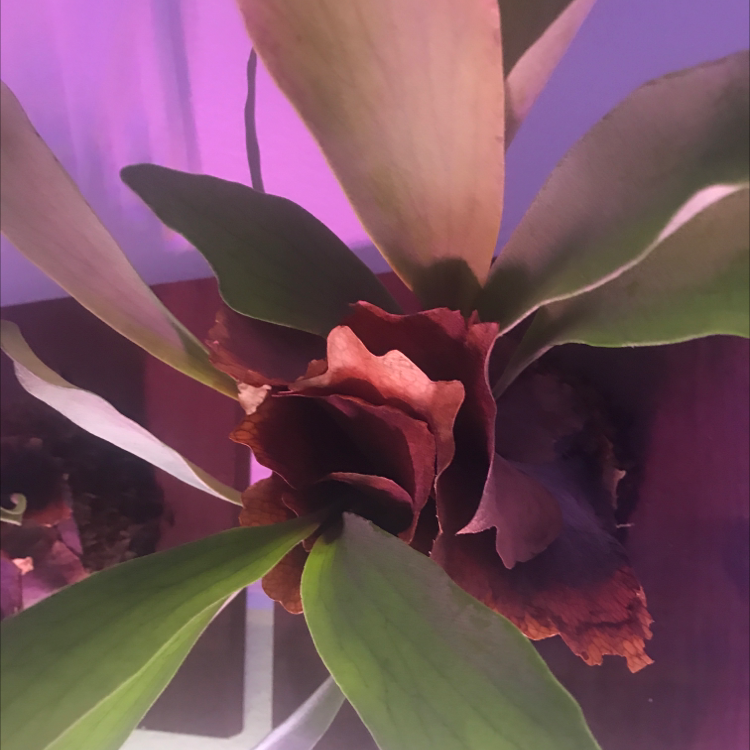
Elkhorn Fern

Best Pot for Elkhorn Fern

Platycerium bifurcatum
Reviewed by Kiersten Rankel M.S.
Quick Answer
Elkhorn Ferns are epiphytes that naturally grow on tree trunks, so a wooden mount or slatted basket is ideal. If using a pot, choose a wood or unglazed ceramic container with excellent drainage and fill it with chunky bark mix, not regular soil. The roots need constant airflow.

What Size Pot Does an Elkhorn Fern Need?

Elkhorn Ferns don't use pots the way most houseplants do. In the wild, they anchor to tree trunks with a flat shield frond while their roots grip bark rather than sit in soil. If you're using a pot, choose one that's wide and shallow to mimic this growth habit.

A 6-8 inch hanging basket or slatted orchid pot works well for young plants. As the fern matures and produces pups, you can move it to a 10-12 inch basket or mount it on a board.

Many growers skip pots entirely and mount Elkhorn Ferns on a piece of wood or cork bark with a pad of sphagnum moss behind the shield frond. This is the closest you'll get to their natural growing conditions.

Young fern (under 8 in) 6โ€“8" basket
Growing fern (8โ€“18 in spread) 8โ€“10" basket or mount
Established fern (18โ€“30 in spread) 10โ€“12" basket or large mount
Mature clump (30+ in spread) Mounted on board or tree

What Material Pot Is Best for Elkhorn Fern?

Elkhorn Fern roots are epiphytic, meaning they evolved to grip tree bark in open air, not to sit in saturated soil. They need constant airflow around the root zone. If any moisture lingers against the roots without air circulation, rot sets in fast.

At the same time, the shield fronds trap organic debris and moisture in nature. The growing medium should hold some humidity without becoming waterlogged. Slatted containers and chunky bark mixes recreate this balance.

Dries fastest → Slowest
Best for Elkhorn Fern
Fabric
Good airflow for epiphytic roots, though it dries quickly. Line with sphagnum moss to hold some moisture.
Unglazed Ceramic
Breathable and works if filled with chunky bark mix instead of regular potting soil.
Wood
The natural match for Elkhorn Ferns. Slatted wooden baskets or a wood mount are the top choices.
Glazed Ceramic
Can work for young plants if you use a very chunky, fast-draining bark mix and don't overwater.
Plastic
Slatted plastic orchid baskets work well. Solid plastic pots trap too much moisture unless heavily amended with bark.
Metal
Wire baskets lined with sphagnum moss are a classic choice for mounting Elkhorn Ferns indoors.

Elkhorn Ferns grow on tree branches in the wild, so their roots need lots of air and a chunky growing medium rather than regular potting soil. Wood is the most natural fit. Slatted wooden baskets or a simple wood mount mimic the conditions this fern grows in naturally.

All six materials can work as long as you skip regular potting soil and use a chunky bark mix or sphagnum moss instead. Wire baskets (metal), slatted plastic orchid pots, and lined ceramic containers are all valid options. The key is airflow around the roots, not the pot material itself.

Stay on top of plant care
Get seasonal reminders for watering and fertilizing โ€” personalized for your plants.
Try Greg Free

Does My Elkhorn Fern Need Drainage Holes?

Drainage isn't just important for Elkhorn Ferns, it's the entire point of the container. These plants need air moving around their roots constantly. A solid pot with just a hole in the bottom isn't enough. Slatted baskets, wire frames, or wooden mounts are all better because they allow airflow from every direction.

If you do use a traditional pot, make sure it has multiple large drainage holes and fill it with chunky orchid bark, not potting soil. The goal is for water to pass through quickly, leaving the roots damp but never sitting in water.

When Should I Repot My Elkhorn Fern?

Elkhorn Ferns are slow growers and don't need repotting often. Every 2-3 years is typical, or when the fern outgrows its mount or basket. Spring is the best time.

If your fern is mounted, you'll know it's time to remount when the root mass extends well beyond the moss pad or the mounting board starts to deteriorate. For potted ferns, repot when the shield fronds completely cover the pot rim and pups are crowding each other.

Use a mix of orchid bark, sphagnum moss, and perlite. Never use standard potting soil, which stays too wet and suffocates the epiphytic roots.

Signs It's Time to Repot
Shield frond completely overhanging the pot or mount edges
Mounting board rotting or falling apart
Pups crowding each other with no room to develop
Roots extending well beyond the sphagnum moss pad

When Can I Plant My Elkhorn Fern Outdoors?

Elkhorn Ferns grow outdoors year-round in USDA zones 9a through 12b. In these climates, mount them on a tree trunk, fence, or outdoor wall where they get bright, indirect light and protection from harsh afternoon sun. They thrive in the humid shade beneath tree canopies.

In cooler zones, keep your Elkhorn Fern indoors or treat it as a seasonal outdoor plant. It can hang on a shaded porch during warm months but must come inside before temperatures drop below 50F. Frost kills the fronds quickly.


Got More Questions?

Can I grow an Elkhorn Fern in a regular pot with drainage holes?
Yes, but use a chunky orchid bark mix instead of potting soil. The roots need air circulation, which regular soil doesn't provide. A slatted basket is a better option if available.
How do I know if my Elkhorn Fern needs a bigger mount?
When the root mass extends well beyond the moss pad and the shield fronds are wrapping around or over the edges, it's time to remount on a larger board.
Can I mount my Elkhorn Fern on a wall without a pot?
Absolutely. This is the most natural way to grow them. Secure a pad of damp sphagnum moss to a wooden board, nestle the fern into it, and fasten it with fishing line or wire until the roots grip the mount.
Should I water the shield fronds or the roots?
Water the root area and the moss behind the shield frond. In nature, the shield frond collects rainwater and funnels it to the roots. Soak the moss thoroughly, then let it dry slightly before watering again.
Why is my Elkhorn Fern's shield frond turning brown?
Brown shield fronds are normal. These fronds naturally dry out and form a papery layer that protects the roots and traps nutrients. Don't remove them.
Stay on top of plant care
Get seasonal reminders for watering and fertilizing โ€” personalized for your plants.
Try Greg Free

About This Article

Kiersten Rankel M.S.
Botanical Data Lead at Greg ยท Plant Scientist
About the Author
Kiersten Rankel holds an M.S. in Ecology & Evolutionary Biology from Tulane University. A certified Louisiana Master Naturalist, she has over a decade of experience in science communication, with research spanning corals, cypress trees, marsh grasses, and more. At Greg, she curates species data and verifies care recommendations against botanical research.
See Kiersten Rankel's full background on LinkedIn.
Editorial Process
Container guidance verified against Platycerium bifurcatum growth data from Greg's botanical database, cross-referenced with USDA hardiness zone data and published horticultural research.
3,661+ Greg users growing this plant
USDA hardiness zones 9aโ€“12b