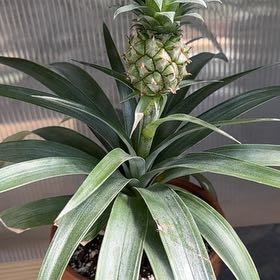
Pineapple plants prefer unglazed ceramic or fabric pots with drainage holes. Start with a 10–12 inch pot for a young plant since the rosette needs room to spread. Fast-draining soil and a heavy, stable container keep this top-heavy tropical upright.
What Size Pot Does a Pineapple Plant Need?
Pineapple plants form a broad rosette of stiff, sword-shaped leaves, so they need a pot that's wide enough to support the leaf spread without tipping over. The root system is relatively shallow for the size of the plant above it.
Start with a 10–12 inch pot for a crown you've just rooted or a young nursery plant. Once the rosette fills out (usually after 1–2 years), move up to a 14–16 inch container.
Avoid pots that are much larger than the root mass. Excess soil around a pineapple's shallow roots holds water longer than the plant can use, which invites rot at the base.
Rooted crown or offset6–8" pot
Young plant (under 1 ft)10–12" pot
Established rosette (1–2 ft)12–14" pot
Fruiting size (2–3 ft)14–16" pot
What Material Pot Is Best for Pineapple?
Pineapple roots are adapted to fast-draining tropical soils. They sit shallow in the ground and don't tolerate sitting in moisture. A pot material that allows airflow and dries out between waterings matches what this plant expects in nature.
Weight matters too. A fruiting pineapple is seriously top-heavy, so a heavier container keeps it from toppling over on a windy patio.
Dries fastest → Slowest
Best for Pineapple
Fabric
Excellent airflow keeps pineapple roots dry and healthy, though you'll water more often in summer.
Unglazed Ceramic
Breathable walls plus extra weight make this the ideal combination for top-heavy pineapple plants.
Wood
Good drainage and insulation, but line the inside to prevent the wood from rotting before the plant fruits.
Glazed Ceramic
Works well if your soil mix is very chunky, since glazed walls don't allow moisture to escape through the sides.
Plastic
Lightweight and affordable, but prone to tipping once the pineapple gets top-heavy. Use a saucer with weight for stability.
MetalOVERHEATS
Metal pots in direct sun can cook pineapple roots, and these plants need full sun to fruit.
Pineapple plants have a rosette shape that gets top-heavy as the fruit develops, so pot weight and stability matter. Unglazed ceramic is an ideal combination of breathable walls and solid heft to keep the plant upright.
Most materials work well here, but avoid metal. Pineapples need full sun to fruit, and metal pots in direct sunlight can get hot enough to damage roots. If you go with a lighter material like plastic, add weight at the base to keep things from tipping.
Stay on top of plant care
Get seasonal reminders for watering and fertilizing — personalized for your plants.
Absolutely. Pineapple roots rot quickly in standing water. In their native habitat, they grow in sandy, fast-draining soil where water moves through almost immediately.
Make sure your pot has at least one large drainage hole, and use a coarse, chunky soil mix. If water doesn't flow freely out the bottom within a few seconds of watering, the mix is too dense.
When Should I Repot My Pineapple Plant?
Pineapple plants grow slowly and don't need frequent repotting. Plan to move yours to a larger container every 2–3 years, or when the rosette has spread well beyond the pot's rim.
Spring is the best time to repot. Gently remove the plant and shake off old soil. If you see tightly coiled roots at the bottom, loosen them before settling the plant into its new pot.
Be careful with the base of the rosette during repotting. Pineapple plants are susceptible to crown rot, so don't bury the base any deeper than it was in the previous pot.
Signs It's Time to Repot
Rosette extends well past the pot rim on all sides
Plant tips over easily from top-heaviness
Roots visible through drainage holes
Soil dries out very quickly after watering
Offsets (pups) are crowding the mother plant
When Can I Plant My Pineapple in the Ground?
Pineapple plants can only grow in the ground year-round in zones 10a through 12b. They have no frost tolerance at all, and temperatures below 40°F can damage the leaves and kill the plant.
If you live in a warm enough zone, plant your pineapple in a sunny spot with sandy, fast-draining soil. In cooler climates, keep it in a pot so you can bring it indoors before temperatures drop in fall.
Got More Questions?
Can I use a pot without drainage holes for my pineapple?
No. Pineapple roots are extremely rot-prone in wet conditions. A pot without drainage will almost certainly kill the plant. Always use a container with holes and a fast-draining soil mix.
How do I know if my pineapple's pot is too big?
If the soil stays damp for more than a few days after watering, the pot is too large. Excess soil holds moisture that shallow pineapple roots can't reach, creating conditions for rot.
Why does my potted pineapple keep tipping over?
Pineapple plants are naturally top-heavy. Switch to a heavier pot like unglazed ceramic, or place a lighter pot inside a weighted cachepot. A wider base also helps with stability.
Should I separate pineapple pups into their own pots?
Yes. Once pups are about one-third the size of the mother plant, twist them off gently and pot them individually in 6–8 inch containers with well-draining soil.
Can I grow a pineapple from a grocery store fruit?
Yes. Twist off the crown, let it dry for a day, then root it in a 6–8 inch pot of sandy mix. It takes 2–3 years to fruit, but it makes a fun houseplant in the meantime.
Stay on top of plant care
Get seasonal reminders for watering and fertilizing — personalized for your plants.
Kiersten Rankel holds an M.S. in Ecology & Evolutionary Biology from Tulane University. A certified Louisiana Master Naturalist, she has over a decade of experience in science communication, with research spanning corals, cypress trees, marsh grasses, and more. At Greg, she curates species data and verifies care recommendations against botanical research.
See Kiersten Rankel's full background on LinkedIn.
Editorial Process
Container guidance verified against Ananas comosus growth data from Greg's botanical database, cross-referenced with USDA hardiness zone data and published horticultural research.