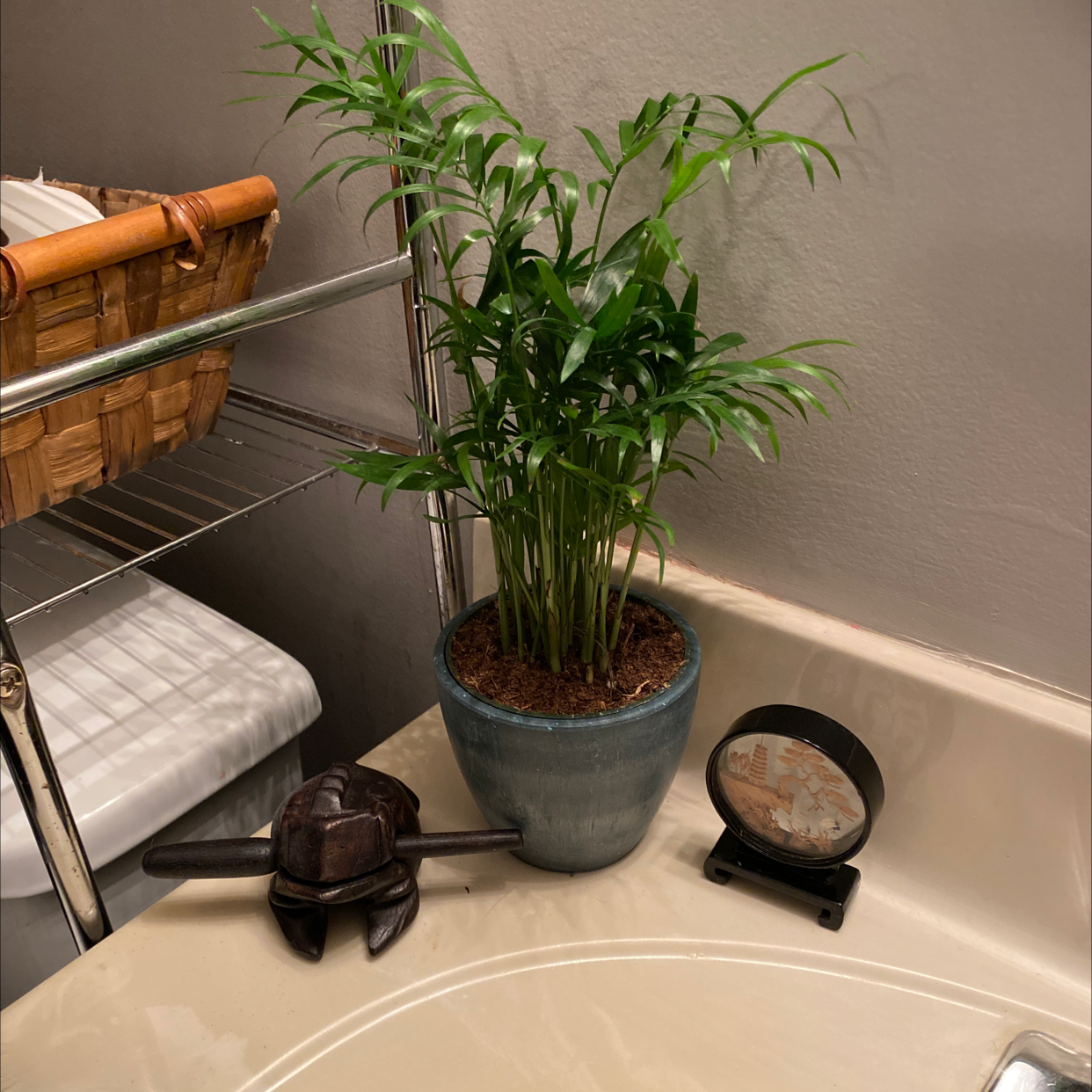
Parlour Palm

Best Pot for Parlour Palm

Chamaedorea elegans
Reviewed by Kiersten Rankel M.S.
Quick Answer
Parlour Palm does best in a plastic or glazed ceramic pot with drainage holes, just 1 to 2 inches wider than its root ball. This slow-growing palm prefers to be slightly snug. Drainage is essential because its fine roots are sensitive to sitting in water.

What Size Pot Does a Parlour Palm Need?

Parlour Palm has a relatively small, slow-growing root system. It prefers a snug pot, just 1 to 2 inches wider than the root ball. These palms can stay happy in the same container for several years.

Because Parlour Palms are often sold as clusters of multiple seedlings in one pot, the root mass can be denser than you expect. Even so, do not jump to a much larger pot. A container with too much extra soil holds water that the roots cannot absorb.

If you want to maintain a compact size, keeping it slightly rootbound actually works in your favor. The palm will simply grow more slowly.

Small palm (under 1 ft) 4โ€“6" pot
Medium palm (1โ€“2 ft) 6โ€“8" pot
Mature palm (2โ€“4 ft) 8โ€“10" pot

What Material Pot Is Best for Parlour Palm?

Parlour Palm comes from the understory of tropical rainforests, where it grows in consistently moist but well-drained soil. Its fine root system does not tolerate sitting in water, but it also does not like drying out completely. A pot that holds some moisture while still allowing drainage strikes the right balance.

This is a slow grower that stays relatively small, so weight and stability are rarely concerns. Choose whatever fits your decor.

Dries fastest → Slowest
Best for Parlour Palm
Fabric
Fabric works if you water regularly, but the soil may dry out faster than this palm prefers.
Unglazed Ceramic
Terra cotta breathes well, just water a bit more often since it dries the soil faster.
Wood
Wooden pots offer moderate drainage and a warm, natural look.
Glazed Ceramic
Glazed ceramic keeps soil evenly moist, which is exactly what this palm likes.
Plastic
Lightweight, retains moisture well, and is easy to move. A great everyday choice.
Metal
Metal works fine for this strictly indoor palm. Use a liner to protect the pot.

Parlour Palm is a low-light tropical that likes its soil to stay lightly moist. Glazed ceramic and plastic are the easiest choices because they hold moisture evenly between waterings.

Every material on the spectrum works for this palm, so pick what fits your room. If you go with unglazed ceramic or fabric, just plan to water a bit more often since those pots dry out faster.

Stay on top of plant care
Get seasonal reminders for watering and fertilizing โ€” personalized for your plants.
Try Greg Free

Does My Parlour Palm Need Drainage Holes?

Yes. Parlour Palm roots are fine and delicate. They need moisture but cannot handle sitting in pooled water. Without drainage, the bottom of the pot becomes a soggy zone where the roots suffocate and rot.

If you want to display your palm in a decorative pot without holes, keep it in a nursery pot with drainage inside the decorative one. Lift it out to water and let it drain fully before putting it back.

When Should I Repot My Parlour Palm?

Parlour Palms grow slowly and only need repotting every two to three years. The best time is spring, when the plant is entering its growing season. Do not repot in winter, as the palm will struggle to recover.

When repotting, be very gentle with the roots. Parlour Palms do not bounce back well from root disturbance. Slide the root ball out, place it in a pot just 1 to 2 inches wider, and fill around the edges with fresh potting mix.

Water lightly after repotting and hold off on fertilizer for a month to let the roots settle into the new soil.

Signs It's Time to Repot
Roots circling tightly at the bottom of the pot
Water sits on the soil surface and drains very slowly
New fronds are noticeably smaller than older ones
Soil has broken down and feels compacted or muddy

Can I Plant My Parlour Palm in the Ground?

Parlour Palm is hardy only in zones 10a through 12b. In these warm, frost-free climates, it makes an elegant understory planting beneath larger trees. It does well in shaded garden beds with rich, well-draining soil.

Everywhere else, this palm must stay in a container indoors. It cannot tolerate frost at all, and even brief exposure to temperatures below 50 degrees Fahrenheit can damage the fronds. Do not put it outside in spring until nighttime lows are reliably warm.


Got More Questions?

Can I use a pot without drainage holes for my Parlour Palm?
It is risky. The fine roots rot quickly in standing water. Use a pot with holes, or keep the palm in a draining nursery pot inside a decorative cachepot.
How do I know if my Parlour Palm's pot is too big?
If the soil stays damp for more than a week after watering and the lower fronds start yellowing, the pot is probably too large. Move it to a smaller container.
My Parlour Palm has multiple stems. Should I separate them?
You can, but Parlour Palms look fullest and healthiest as a cluster. Separating them risks damaging the roots, and individual stems can look sparse on their own.
Does my Parlour Palm need a deep or wide pot?
A standard pot that is about as deep as it is wide works well. Parlour Palm roots are not especially deep or spreading.
How long can a Parlour Palm stay in the same pot?
Two to three years is typical. Even if you do not size up, refresh the soil every couple of years to replace depleted nutrients and restore drainage.
Stay on top of plant care
Get seasonal reminders for watering and fertilizing โ€” personalized for your plants.
Try Greg Free

About This Article

Kiersten Rankel M.S.
Botanical Data Lead at Greg ยท Plant Scientist
About the Author
Kiersten Rankel holds an M.S. in Ecology & Evolutionary Biology from Tulane University. A certified Louisiana Master Naturalist, she has over a decade of experience in science communication, with research spanning corals, cypress trees, marsh grasses, and more. At Greg, she curates species data and verifies care recommendations against botanical research.
See Kiersten Rankel's full background on LinkedIn.
Editorial Process
Container guidance verified against Chamaedorea elegans growth data from Greg's botanical database, cross-referenced with USDA hardiness zone data and published horticultural research.
32,582+ Greg users growing this plant
USDA hardiness zones 10aโ€“12b