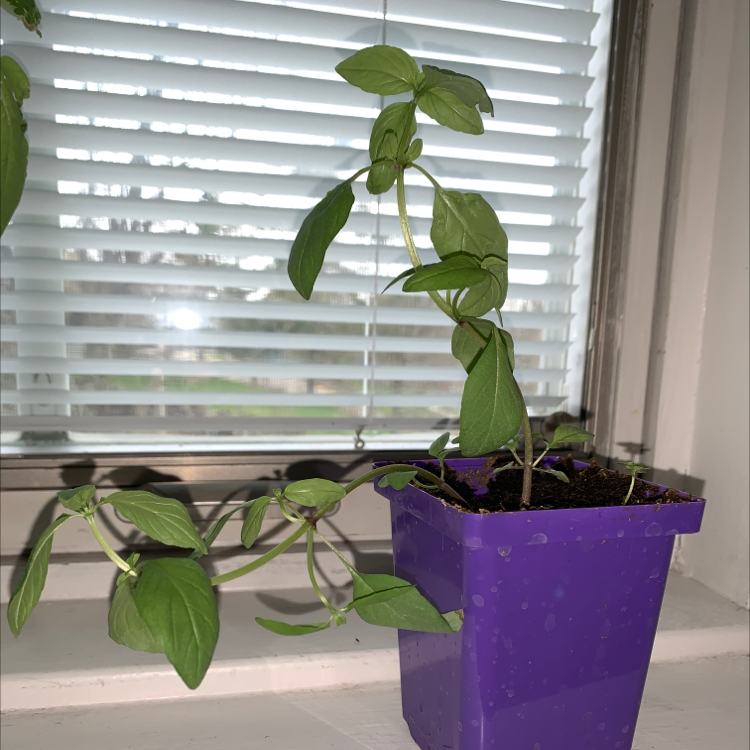
Holy Basil (Tulsi)

Best Pot for Holy Basil (Tulsi)

Ocimum tenuiflorum
Reviewed by Kiersten Rankel M.S.
Quick Answer
Holy Basil grows best in an unglazed ceramic or plastic pot that is at least 8 inches wide with generous drainage holes. This fast-growing annual needs room for its spreading roots and warm soil. Drainage is essential because basil wilts from both drought and waterlogging.

What Size Pot Does Holy Basil Need?

Holy Basil is a bushy annual that grows quickly once warm weather arrives. Its root system spreads outward and fills a pot fast. Start with a pot at least 8 inches wide and 6 inches deep for a single plant.

If you want a fuller, bushier plant, go with a 10 to 12 inch pot. The extra soil volume holds more nutrients and moisture, which matters because basil is a heavy feeder during peak growth.

Avoid very small pots. Basil in a 4-inch pot will become rootbound within weeks, dry out constantly, and bolt to seed before you get a good harvest.

Seedling or small transplant 4โ€“6" starter pot
Single plant, full season 8โ€“10" pot
Multiple plants or large bush 10โ€“14" pot

What Material Pot Is Best for Holy Basil?

Holy Basil roots like warm, well-drained soil. In its native Southeast Asia, it grows in tropical ground that heats up quickly and never stays soggy for long. A pot material that warms up in the sun and lets the soil breathe works well for this heat-loving herb.

The biggest risk for basil in containers is cold, wet roots. If you are growing outdoors, a material that absorbs some warmth from the sun will help the roots stay happy.

Dries fastest → Slowest
Best for Holy Basil (Tulsi)
Fabric
Great airflow and drainage for basil, but dries out fast in hot weather so water daily.
Unglazed Ceramic
Terra cotta is a classic choice for basil, it warms up in the sun and wicks away excess moisture.
Wood
Wooden planters drain well and provide moderate insulation for the roots.
Glazed Ceramic
Glazed pots retain more moisture, which can be helpful in very hot climates where basil dries out fast.
Plastic
Lightweight and cheap, perfect for an annual you will replant each year.
Metal OVERHEATS
Metal pots in full sun can heat the soil beyond what even heat-loving basil can tolerate, cooking the roots.

Holy Basil is a heat-loving herb from Southeast Asia, so it thrives in pots with good drainage. Unglazed ceramic is a classic herb pot that warms up in the sun and wicks away extra moisture, which basil roots appreciate.

Plastic is the most practical pick since basil is typically replanted each year. It is cheap, lightweight, and holds moisture well enough to reduce watering on hot days.

Skip metal pots outdoors. Even though Holy Basil loves warmth, metal in full sun can push soil temperatures high enough to damage the roots.

Stay on top of plant care
Get seasonal reminders for watering and fertilizing โ€” personalized for your plants.
Try Greg Free

Does My Holy Basil Need Drainage Holes?

Absolutely. Basil is surprisingly sensitive to wet feet. Without drainage, water sits at the bottom of the pot and the roots rot within days, especially in cooler weather when evaporation slows down.

If your pot only has one small hole, consider drilling additional holes or adding a thick layer of gravel at the bottom. The more freely water can escape, the healthier your basil will be.

When Should I Repot My Holy Basil?

Holy Basil is an annual, so you usually plant it once and grow it through the season rather than repotting repeatedly. If you started seeds in a small starter pot, transplant into its final container once the seedling has two to three sets of true leaves.

If your basil outgrows its pot mid-season and you notice it wilting despite regular watering, move it to a pot 2 to 4 inches wider. Handle the roots gently and water well right after transplanting.

The best time to transplant is in the morning or evening to avoid heat stress. Keep the plant in light shade for a day or two afterward.

Signs It's Time to Repot
Plant wilts by midday despite morning watering
Roots visible through drainage holes
Leaves turning yellow from the bottom up
Growth slows and the plant starts flowering early

Can I Plant My Holy Basil in the Ground?

Holy Basil is a tender annual that only survives year-round in zones 10a through 11b. In these frost-free climates, it can reseed itself and come back year after year on its own.

In cooler zones, plant it in the ground after all danger of frost has passed and nighttime temperatures stay above 50 degrees Fahrenheit. It will grow through summer and die at the first frost. Harvest heavily before cold weather arrives. Many growers prefer containers so they can move the plant indoors on unexpectedly cold nights.


Got More Questions?

Can I use a pot without drainage holes for Holy Basil?
No. Basil is very sensitive to waterlogged soil and will rot quickly. Always use a pot with drainage holes, or drill your own.
How do I know if my Holy Basil's pot is too big?
If the plant is small and the outer soil stays wet for days, the pot is too large. Basil seedlings do better in a snug pot and can be moved to a larger one as they grow.
Can I grow multiple Holy Basil plants in one pot?
Yes. Space them 4 to 6 inches apart in a pot at least 12 inches wide. They will compete for nutrients, so fertilize regularly and harvest often to keep them bushy.
Should I bring my potted Holy Basil indoors for winter?
You can try, but basil needs a lot of light and warmth. A sunny south-facing window or grow lights can keep it alive, but indoor plants usually produce less than outdoor summer plants.
What soil mix is best for Holy Basil in a pot?
A standard potting mix with added perlite for drainage works well. Basil likes fertile, well-drained soil with a slightly acidic to neutral pH.
Stay on top of plant care
Get seasonal reminders for watering and fertilizing โ€” personalized for your plants.
Try Greg Free

About This Article

Kiersten Rankel M.S.
Botanical Data Lead at Greg ยท Plant Scientist
About the Author
Kiersten Rankel holds an M.S. in Ecology & Evolutionary Biology from Tulane University. A certified Louisiana Master Naturalist, she has over a decade of experience in science communication, with research spanning corals, cypress trees, marsh grasses, and more. At Greg, she curates species data and verifies care recommendations against botanical research.
See Kiersten Rankel's full background on LinkedIn.
Editorial Process
Container guidance verified against Ocimum tenuiflorum growth data from Greg's botanical database, cross-referenced with USDA hardiness zone data and published horticultural research.
1,046+ Greg users growing this plant
USDA hardiness zones 10aโ€“11b