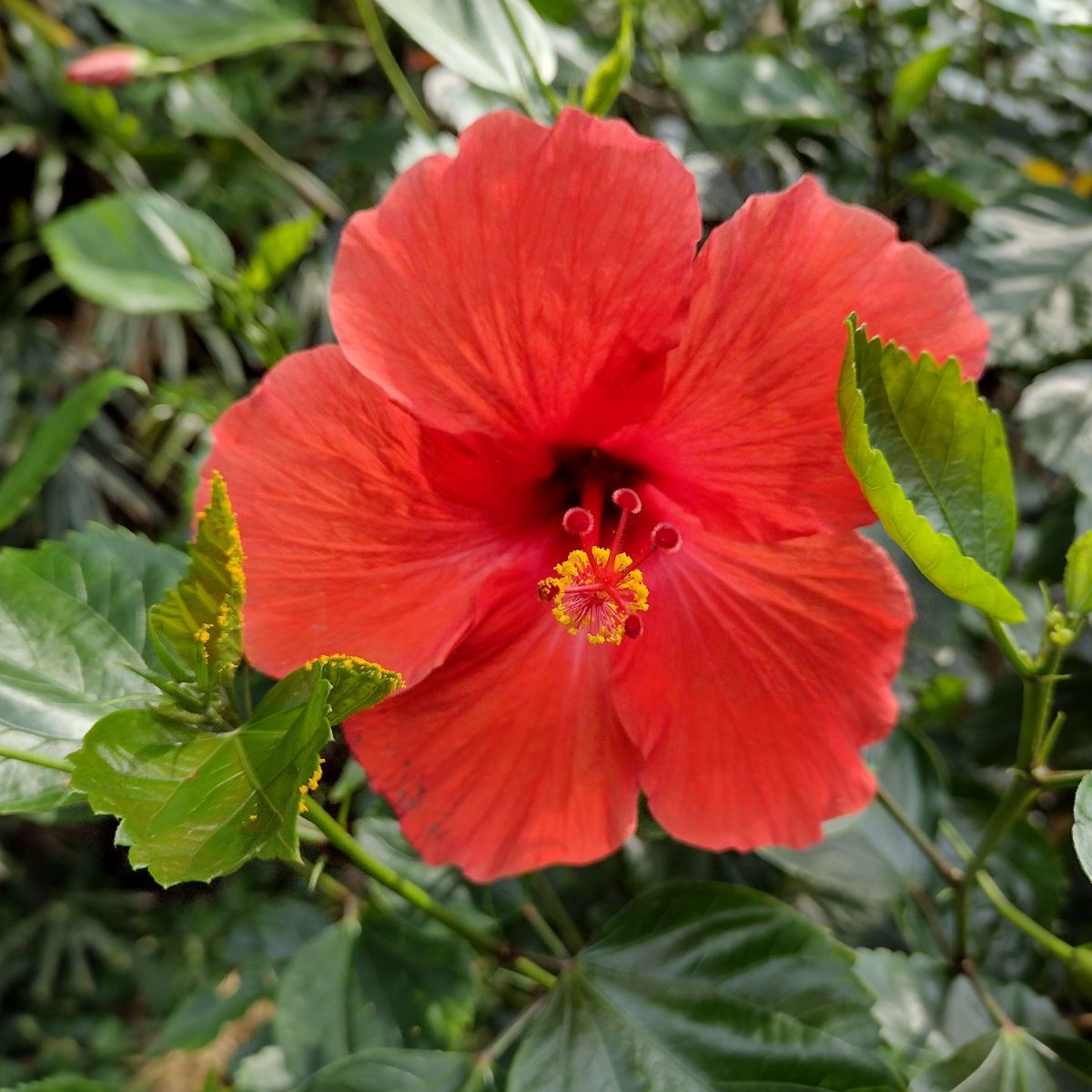
Chinese Hibiscus does best in a glazed ceramic or plastic pot with drainage holes. Choose a pot about 2 inches wider than the root ball. These tropical shrubs like slightly snug roots, which encourages flowering over leaf growth.
What Size Pot Does a Chinese Hibiscus Need?
Chinese Hibiscus has a branching growth habit and can reach about 4 feet tall and wide. Despite their size, they actually bloom better when their roots are slightly snug. A pot that's 1-2 inches wider than the root ball is ideal.
If you jump to a much larger pot, the plant will put energy into root growth instead of flowers. When you do repot, go up one size at a time.
Choose a pot with some depth. Hibiscus roots grow downward as well as outward, and a shallow pot won't give them enough room.
Young plant (under 1 ft)6–8" pot
Growing plant (1–2 ft)10–12" pot
Mature plant (2–4 ft)14–18" pot
What Material Pot Is Best for Chinese Hibiscus?
Chinese Hibiscus has a moderately vigorous root system that needs even moisture and warm soil. These tropical plants are sensitive to both drought and cold roots. Their branching root network benefits from consistent conditions without wild swings between wet and dry.
Because hibiscus is typically grown outdoors in full or partial sun, the pot material also needs to handle heat without cooking the roots.
Dries fastest → Slowest
Best for Chinese Hibiscus
Fabric
Provides great aeration but dries quickly. Water more frequently, especially in summer heat.
Unglazed Ceramic
Good airflow and a classic look. Water a bit more often since the porous walls wick moisture.
Wood
Insulates roots well against temperature swings. A great natural choice for outdoor hibiscus.
Glazed Ceramic
An excellent all-around choice. Holds moisture, stays stable, and looks great on a patio.
Plastic
Lightweight and retains moisture well. Can heat up in direct sun, so consider a light-colored pot.
MetalOVERHEATS
Metal conducts heat quickly and can damage hibiscus roots when placed in full summer sun.
Chinese Hibiscus is a sun-loving tropical shrub that blooms best with consistent moisture and warmth. Glazed ceramic and wood are excellent outdoor choices because they hold moisture well and insulate roots from temperature swings.
Most pot materials work for hibiscus, but avoid metal outdoors. Metal conducts heat quickly in full summer sun and can damage the roots. If you love a metal look, stick to shaded spots or indoor use only.
Stay on top of plant care
Get seasonal reminders for watering and fertilizing — personalized for your plants.
Yes. Chinese Hibiscus needs consistent moisture but cannot tolerate waterlogged roots. Drainage holes are non-negotiable. Without them, excess water sits at the bottom of the pot and causes root rot.
Hibiscus in pots often need daily watering in hot weather, so the water needs to flow through freely. Elevate the pot on feet if it sits on a flat surface to keep the holes from getting blocked.
When Should I Repot My Chinese Hibiscus?
Repot your Chinese Hibiscus every 1-2 years in spring, before the main flowering season begins. This gives roots time to settle into fresh soil while the plant is ramping up growth.
Gently remove the root ball and loosen any circling roots. Use a well-draining potting mix, and set the plant at the same depth it was growing before. Water thoroughly after repotting.
Hibiscus is a moderate grower, so it doesn't outgrow pots as fast as some tropicals. If the plant is in the largest pot you want to manage, you can refresh the soil without upsizing by replacing the top few inches of mix each spring.
Signs It's Time to Repot
Roots growing out of drainage holes
Plant wilting quickly despite regular watering
Flower buds dropping before opening
Yellowing lower leaves during the growing season
Soil drying out within a day of watering
When Can I Plant My Chinese Hibiscus in the Ground?
Chinese Hibiscus is hardy in USDA zones 9a through 11b. In these warm climates, plant it in a sunny spot with well-draining soil. It makes an excellent hedge or specimen plant when given room to reach its full 4-foot spread.
In zones cooler than 9a, keep your hibiscus in a pot so you can bring it indoors before temperatures drop below 50F. Place it in a bright window during winter and reduce watering. It may drop some leaves indoors, but it will bounce back in spring.
Got More Questions?
Can I use a pot without drainage holes for my Chinese Hibiscus?
No. Hibiscus roots rot quickly in standing water. Always use a pot with drainage holes, or use a nursery pot inside a decorative cachepot and empty the excess water after each watering.
How do I know if my Chinese Hibiscus pot is too big?
If the plant stops blooming and puts out mostly foliage, the pot may be too large. Slightly root-bound hibiscus tends to flower more. Soil staying wet for over a week is another sign the pot is oversized.
Should I use a heavy or lightweight pot for hibiscus?
A heavier pot is better for outdoor hibiscus. These plants get top-heavy with foliage and can catch wind. A weighty ceramic or stone pot keeps things stable.
Can I keep my Chinese Hibiscus in the same pot for years?
Yes, if you refresh the top few inches of soil each spring. Hibiscus tolerates being slightly pot-bound. Just watch for signs of stress like rapid wilting or reduced blooming.
What size pot for a hibiscus tree form?
A standard hibiscus trained as a tree form needs a pot at least 14-18 inches wide and equally deep. The trunk needs a stable, heavy base to stay upright.
Stay on top of plant care
Get seasonal reminders for watering and fertilizing — personalized for your plants.
Kiersten Rankel holds an M.S. in Ecology & Evolutionary Biology from Tulane University. A certified Louisiana Master Naturalist, she has over a decade of experience in science communication, with research spanning corals, cypress trees, marsh grasses, and more. At Greg, she curates species data and verifies care recommendations against botanical research.
See Kiersten Rankel's full background on LinkedIn.
Editorial Process
Container guidance verified against Hibiscus rosa-sinensis growth data from Greg's botanical database, cross-referenced with USDA hardiness zone data and published horticultural research.