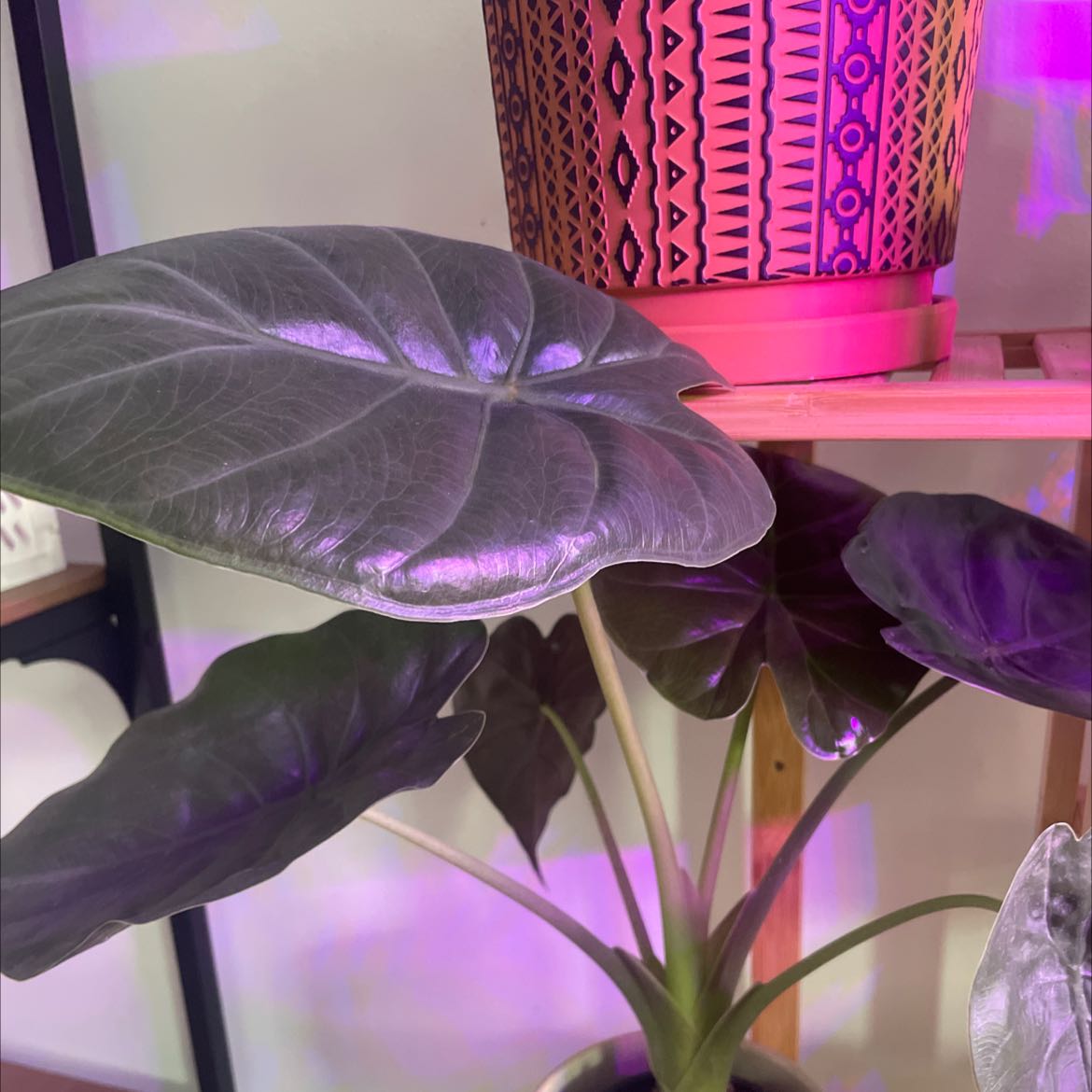
New Guinea Shield does best in a plastic or glazed ceramic pot with drainage holes. Keep the pot snug, only 1 to 2 inches wider than the corm. This Alocasia holds water in its thick stems, so a pot that dries out between waterings helps prevent rot.
What Size Pot Does a New Guinea Shield Need?
Alocasia wentii grows from a central corm with relatively compact roots that prefer a snug fit. A pot 1 to 2 inches wider than the corm is ideal. Too much extra space means the soil stays wet longer than the roots can handle.
As the plant grows taller and produces larger leaves, it may become top-heavy. A heavier pot material like ceramic can help with stability, or you can use a decorative cover pot around a lighter plastic nursery pot.
When the corm has filled the pot and you see roots emerging from the drainage holes, move up one size. Do not skip sizes with Alocasias.
Small plant or offset (under 1 ft)4–6" pot
Growing plant (1–2 ft tall)6–8" pot
Mature plant (2–3 ft tall)8–10" pot
Large specimen (3+ ft tall)10–12" pot
What Material Pot Is Best for New Guinea Shield?
Alocasia wentii grows from a starchy corm that stores water, making it somewhat sensitive to staying too wet for too long. The roots want consistent moisture but not saturation. A pot that lets the top inch or two of soil dry between waterings hits the sweet spot.
Because this plant can reach 3 feet tall with large, heavy leaves, stability is also worth thinking about. A pot with some weight to it can prevent the whole plant from toppling over.
Dries fastest → Slowest
Best for New Guinea Shield
Fabric
Fabric pots dry evenly and prevent overwatering, but you will need to water more often.
Unglazed Ceramic
Terra cotta wicks away extra moisture and provides the weight to keep this top-heavy plant stable.
Wood
Wooden planters provide moderate drainage and a natural look that suits this tropical plant.
Glazed Ceramic
Glazed ceramic balances moisture retention with weight for stability.
Plastic
Lightweight and affordable, just make sure to let the top inch of soil dry between waterings.
Metal
Metal works fine for this indoor plant. Use a liner to protect the pot from moisture over time.
New Guinea Shield is a tropical Alocasia that likes evenly moist soil without staying soggy. Every material on the spectrum works, giving you plenty of options to match your decor.
This plant gets top-heavy as its large shield-shaped leaves grow in. Heavier pots like glazed ceramic or unglazed ceramic help keep things stable and upright.
Stay on top of plant care
Get seasonal reminders for watering and fertilizing — personalized for your plants.
Yes. Alocasia corms are prone to rot when sitting in stagnant water. Drainage holes let excess water flow out so the soil can dry down slightly between waterings.
If you love a decorative pot without holes, use it as a cachepot. Keep the plant in a plastic nursery pot inside, and empty any water that collects in the outer pot after watering.
When Should I Repot My New Guinea Shield?
Repot your New Guinea Shield every one to two years in spring or early summer when it is actively growing. Alocasias prefer to be slightly snug, so do not rush to repot unless the plant is clearly rootbound.
When you do repot, gently remove the plant and inspect the corm. Trim off any soft or mushy sections with a clean blade. This is also a good time to separate offsets if you want to propagate.
Place the corm in fresh, chunky, well-draining potting mix. Do not bury it deeper than it was in the old pot. Water lightly and wait for new growth before resuming your normal watering routine.
Signs It's Time to Repot
Roots circling the bottom of the pot
Roots growing out of drainage holes
New leaves are significantly smaller than older ones
Plant becomes unstable and leans heavily
Soil dries out much faster than it used to
Can I Plant My New Guinea Shield in the Ground?
New Guinea Shield is hardy in zones 7b through 11b. In zones 9 and warmer, it can live in the ground year-round in a shaded spot with rich, well-draining soil. It makes a striking understory planting beneath trees.
In zones 7b through 8, the top growth will die back in winter but the corm can survive if you mulch heavily over it. In zones colder than 7b, keep this plant in a container so you can bring it indoors before the first frost.
Got More Questions?
Can I use a pot without drainage holes for my New Guinea Shield?
It is risky. The corm stores water and is prone to rot in soggy soil. Always use drainage holes, or keep the plant in a nursery pot inside a decorative cover.
How do I know if my New Guinea Shield's pot is too big?
If the soil stays damp for more than a week after watering and you notice yellowing lower leaves, the pot is likely too large. The excess soil holds moisture the roots cannot use.
Should I use a heavy or lightweight pot?
A heavier pot like ceramic or stone helps with stability. This plant gets top-heavy as it matures, and a lightweight plastic pot can tip over easily.
Can I keep the offsets in the same pot as the mother plant?
You can, but the pot will fill up quickly. Separating offsets at repotting time gives each plant room to grow and prevents overcrowding.
What soil mix should I use in my Alocasia pot?
A chunky, well-draining mix is best. Combine regular potting soil with perlite and orchid bark in roughly equal parts. The coarse texture keeps air around the corm and prevents waterlogging.
Stay on top of plant care
Get seasonal reminders for watering and fertilizing — personalized for your plants.
Kiersten Rankel holds an M.S. in Ecology & Evolutionary Biology from Tulane University. A certified Louisiana Master Naturalist, she has over a decade of experience in science communication, with research spanning corals, cypress trees, marsh grasses, and more. At Greg, she curates species data and verifies care recommendations against botanical research.
See Kiersten Rankel's full background on LinkedIn.
Editorial Process
Container guidance verified against Alocasia wentii growth data from Greg's botanical database, cross-referenced with USDA hardiness zone data and published horticultural research.