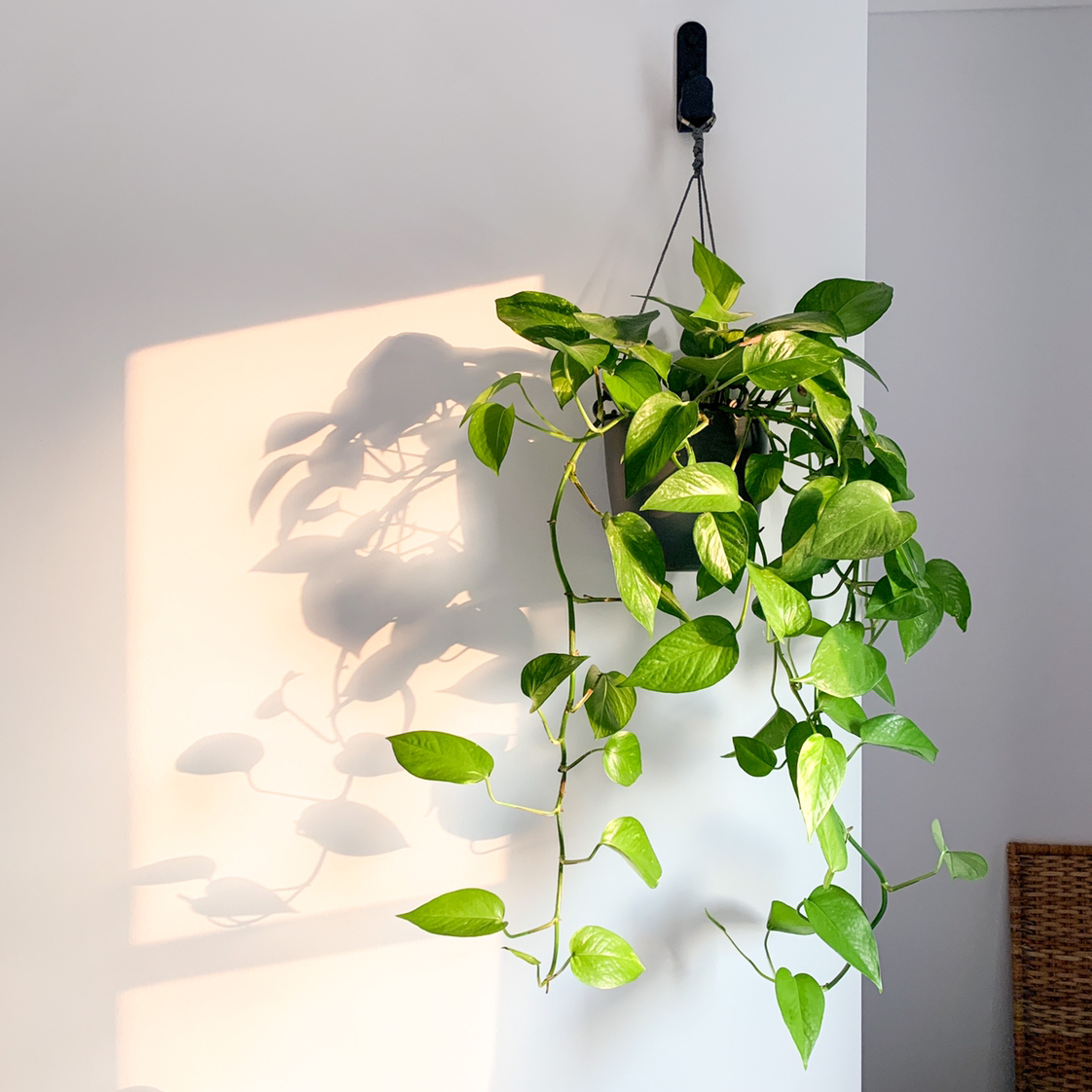
Golden Pothos is one of the most adaptable houseplants when it comes to pots. Almost any material with drainage holes works well. A 6-8 inch plastic or glazed ceramic pot is a great starting point, and you can size up as the vines grow.
What Size Pot Does a Golden Pothos Need?
Golden Pothos has a relatively modest root system compared to the length of its vines. The roots grow outward rather than deep, so a standard-depth pot works fine.
When repotting, go 1-2 inches wider. Pothos actually does well slightly root-bound, which can encourage more vigorous trailing growth. If you want a fuller plant, keep the pot on the snug side. If you want maximum vine length, give the roots a bit more room.
Small cutting or starter (under 6 inches)4–5" pot
Young plant (6–12 inches of vine)6–8" pot
Established plant (several feet of vine)8–10" pot
Mature trailing plant10–12" pot
What Material Pot Is Best for Golden Pothos?
Golden Pothos roots are forgiving and adaptable. They tolerate a wide range of moisture levels, from slightly dry to moderately moist. The roots aren't especially prone to rot as long as the pot has drainage.
This flexibility means you can choose a pot material based on your lifestyle. If you tend to overwater, a more porous material helps. If you forget to water, something that holds moisture gives you more buffer.
Dries fastest → Slowest
Best for Golden Pothos
Fabric
Great if you tend to overwater. The extra airflow keeps roots healthy even when you're generous with the watering can.
Unglazed Ceramic
Breathable and sturdy. A solid all-around choice that dries out at a moderate pace.
Wood
Works well for pothos and adds a natural look, especially for trailing plants on shelves.
Glazed Ceramic
Holds moisture a bit longer, giving you more days between waterings.
Plastic
Lightweight, affordable, and easy to hang. The most popular choice for trailing pothos.
Metal
Fine for indoor use. The sleek look pairs well with a trailing pothos on a shelf or mantel.
Golden Pothos is one of the most forgiving houseplants, and that extends to pot choice. Every material on the spectrum works, so pick whatever fits your space and style.
Plastic is the most popular option for trailing pothos, since it's lightweight and easy to hang. It also holds moisture well, giving you more days between waterings. Fabric and unglazed ceramic are great if you tend to overwater, since they dry out faster.
Glazed ceramic, wood, and metal all sit in the middle and work without any fuss. The only thing pothos really needs is a drainage hole to keep water from pooling at the bottom.
Stay on top of plant care
Get seasonal reminders for watering and fertilizing — personalized for your plants.
Yes. Even though pothos is tough, drainage holes make a big difference in long-term root health. Without them, water collects at the bottom and eventually causes root rot, even in a forgiving plant like pothos.
If you love a decorative pot that has no holes, just keep the pothos in a plastic nursery pot and slip it inside. Lift the inner pot out to water, let it drain, and set it back.
When Should I Repot My Golden Pothos?
Golden Pothos is a fast grower and usually needs repotting every 12-18 months. Spring and summer are ideal, though pothos is tough enough to handle repotting in any season if needed.
Gently slide the plant out and loosen the outer roots. If the roots are tightly wound, make a few shallow vertical cuts with clean scissors to encourage outward growth. Use a standard indoor potting mix and water well after repotting.
If you'd rather not size up, you can trim the roots and vines by about one-third and put the plant back in the same pot with fresh soil.
Signs It's Time to Repot
Roots growing out of the drainage holes
Water runs straight through without soaking the soil
Vines growing slower than usual despite good light
Yellowing leaves near the base of the plant
Roots visibly circling inside the pot when you lift the plant
When Can I Plant My Golden Pothos in the Ground?
Golden Pothos is hardy outdoors only in USDA zones 10a through 12b. In these tropical and subtropical climates, it grows vigorously as a ground cover or climbing vine and can become quite large.
In all other zones, keep pothos as an indoor container plant. You can set it outside on a shaded patio in summer when temperatures stay above 60°F, but bring it in before any chance of frost. Pothos has zero cold tolerance and will die back below 50°F.
Got More Questions?
Can I use a pot without drainage holes for my Golden Pothos?
It's better not to. Pothos is forgiving, but sitting in water will still cause root rot over time. Use a draining pot or a nursery pot inside a decorative cover.
How do I know if my Pothos pot is too big?
If the soil stays wet for more than a week, the pot is too large. Pothos roots in excess damp soil become mushy. Size up gradually, not all at once.
Can I grow Golden Pothos in a hanging basket?
Absolutely. Hanging baskets are one of the most popular ways to display trailing pothos. Use a plastic or fabric liner to keep soil from falling through, and make sure there's drainage.
Should I use a moss pole pot setup for my Pothos?
If you want larger leaves and more vigorous growth, a moss pole in a standard pot encourages pothos to climb. The leaves grow bigger when the plant climbs versus trails.
Can I grow Golden Pothos in water instead of a pot?
Yes, pothos grows well in water indefinitely. Change the water every 1-2 weeks and add a drop of liquid fertilizer monthly. The plant will grow more slowly than in soil, but it works.
Stay on top of plant care
Get seasonal reminders for watering and fertilizing — personalized for your plants.
Kiersten Rankel holds an M.S. in Ecology & Evolutionary Biology from Tulane University. A certified Louisiana Master Naturalist, she has over a decade of experience in science communication, with research spanning corals, cypress trees, marsh grasses, and more. At Greg, she curates species data and verifies care recommendations against botanical research.
See Kiersten Rankel's full background on LinkedIn.
Editorial Process
Container guidance verified against Epipremnum aureum growth data from Greg's botanical database, cross-referenced with USDA hardiness zone data and published horticultural research.