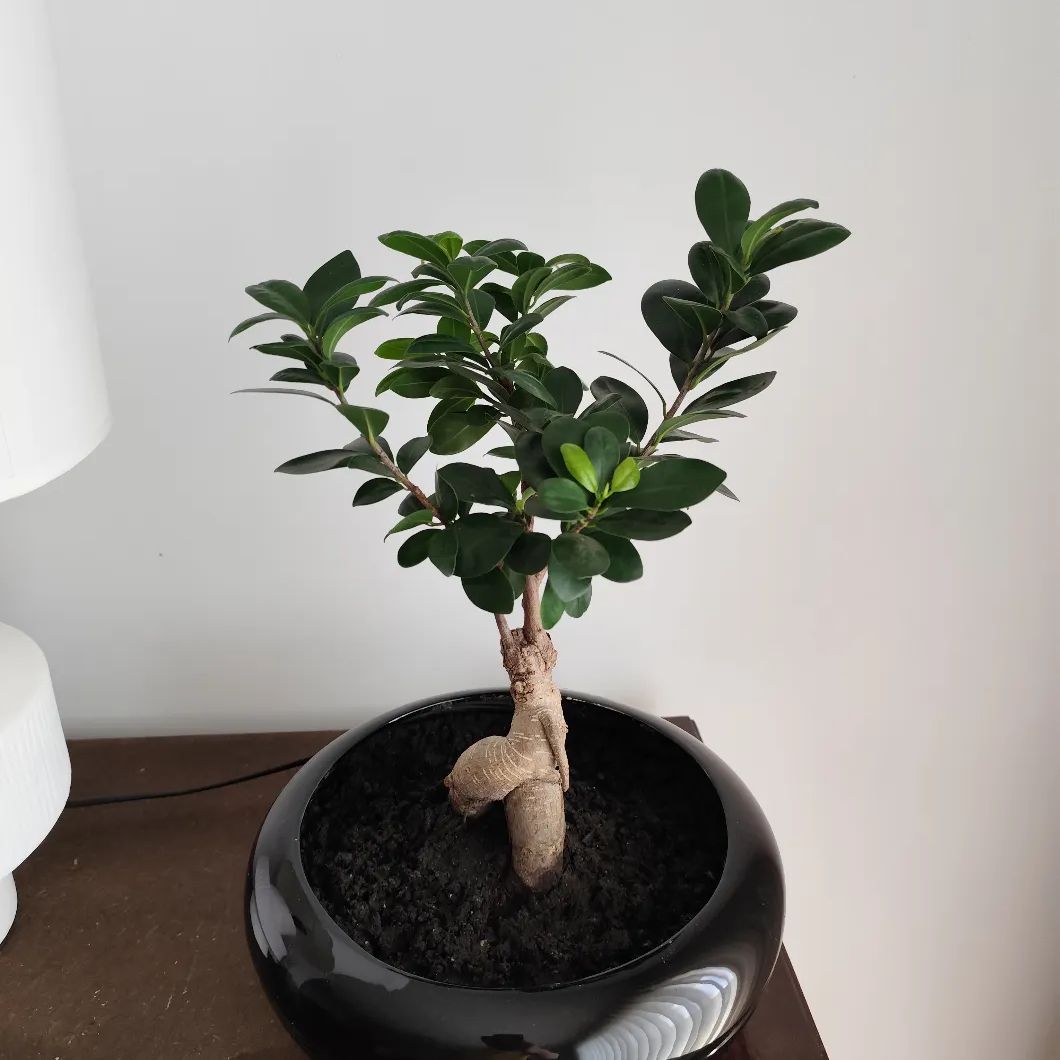
A shallow glazed ceramic or unglazed ceramic pot is ideal for Ficus Ginseng. The pot should be wide and shallow to showcase the thick exposed roots, with drainage holes to prevent root rot. Choose a pot roughly two-thirds the height of the trunk.
What Size Pot Does a Ficus Ginseng Need?
Ficus Ginseng is typically grown as a bonsai-style plant with thick, bulbous aerial roots on display. The pot should be shallow and wide, roughly matching the spread of the canopy. A good rule is a pot depth about two-thirds the trunk height.
When repotting, go only 1 inch wider. Ficus Ginseng actually performs better slightly root-bound, which helps keep the plant compact and encourages the distinctive thick root formation. A pot that's too deep hides the roots and holds excess moisture below them.
Small bonsai (under 8 inches)4–6" wide, 2–3" deep
Medium bonsai (8–14 inches)6–8" wide, 3–4" deep
Large bonsai (14+ inches)8–12" wide, 4–5" deep
What Material Pot Is Best for Ficus Ginseng?
Ficus Ginseng roots need steady moisture but excellent drainage. The thick aerial roots store some water, so the pot material should lean toward breathable to prevent soggy conditions at the base.
Because this is a bonsai-style plant kept indoors, aesthetics matter as much as function. A material with some weight helps keep the top-heavy trunk stable on its shallow base.
Dries fastest → Slowest
Best for Ficus Ginseng
Fabric
Dries quickly and looks casual, but works if you water frequently and want maximum root aeration.
Unglazed Ceramic
The classic bonsai choice. Breathable walls wick away excess moisture while the weight anchors the plant.
Wood
Provides gentle drainage and a natural look that complements the ginseng trunk.
Glazed Ceramic
Retains moisture a bit longer than unglazed, giving you more time between waterings.
Plastic
Lightweight and affordable for growing out young plants, though a heavier pot looks and performs better long-term.
Metal
Works indoors but offers no breathability, so be careful not to overwater.
Ficus Ginseng is often grown as a bonsai, and pot choice is part of the tradition. Every material on the spectrum works, but unglazed ceramic is the classic bonsai pick for good reason. Its breathable walls keep roots healthy while the weight anchors the plant.
Glazed ceramic is another popular option that retains a bit more moisture and comes in the shallow, decorative styles that complement the ginseng trunk. Wood adds a natural feel and drains gently.
Fabric and plastic are more practical than decorative. They work fine for growing out young plants, but most growers graduate to ceramic or wood for display.
Stay on top of plant care
Get seasonal reminders for watering and fertilizing — personalized for your plants.
Absolutely. Ficus Ginseng is grown in very shallow pots where water has little room to move. Without drainage holes, even a small amount of excess water can saturate the entire root zone.
Most bonsai pots come with drainage holes and mesh screens to hold soil in place. If you're using a non-bonsai pot, make sure it has at least one hole and add a thin layer of coarse gravel at the bottom for extra drainage.
When Should I Repot My Ficus Ginseng?
Ficus Ginseng grows slowly and only needs repotting every 2-3 years. The best time is early spring, just before new growth starts.
During repotting, trim back about one-third of the root mass with clean scissors. This root pruning is standard bonsai care and keeps the plant healthy in its shallow pot. Use a well-draining bonsai soil mix, or combine equal parts potting soil, perlite, and pine bark.
Water thoroughly after repotting and keep the plant in a warm spot with indirect light for a couple of weeks.
Signs It's Time to Repot
Roots lifting the trunk above the pot rim
Water pools on the soil surface instead of soaking in
Leaves dropping despite consistent watering
Soil has broken down into a dense, compact mass
When Can I Plant My Ficus Ginseng in the Ground?
Ficus Ginseng is hardy in USDA zones 9a through 11b. In these climates it can grow outdoors year-round, though it loses the compact bonsai form when planted in open ground and can become a large tree.
In most climates, Ficus Ginseng is best kept as an indoor container plant. You can move it outside in summer once nighttime temperatures stay above 60°F, but bring it back inside before fall. It's very sensitive to cold and will drop leaves below 50°F.
Got More Questions?
Can I use a pot without drainage holes for my Ficus Ginseng?
No. The shallow pot style used for Ficus Ginseng makes drainage holes essential. Without them, the small volume of soil becomes waterlogged very quickly.
How do I know if my Ficus Ginseng's pot is too big?
If you can't see the thick aerial roots above the soil line, the pot is probably too deep. The roots should sit above the surface, and the pot should be shallow and wide.
Can I use a regular round pot instead of a bonsai pot?
Yes, as long as it's shallow with drainage holes. A wide, low bowl or azalea pot works well. Avoid tall, narrow pots that hide the root structure.
Should I wire the Ficus Ginseng into its pot?
Wiring through the drainage holes is standard bonsai practice and helps secure a top-heavy trunk. It's optional for stable, well-rooted plants.
Does my Ficus Ginseng need a humidity tray?
A humidity tray with pebbles and water placed under the pot can help, especially in dry indoor air. Just make sure the pot sits on the pebbles above the water line, not in it.
Stay on top of plant care
Get seasonal reminders for watering and fertilizing — personalized for your plants.
Kiersten Rankel holds an M.S. in Ecology & Evolutionary Biology from Tulane University. A certified Louisiana Master Naturalist, she has over a decade of experience in science communication, with research spanning corals, cypress trees, marsh grasses, and more. At Greg, she curates species data and verifies care recommendations against botanical research.
See Kiersten Rankel's full background on LinkedIn.
Editorial Process
Container guidance verified against Ficus microcarpa growth data from Greg's botanical database, cross-referenced with USDA hardiness zone data and published horticultural research.