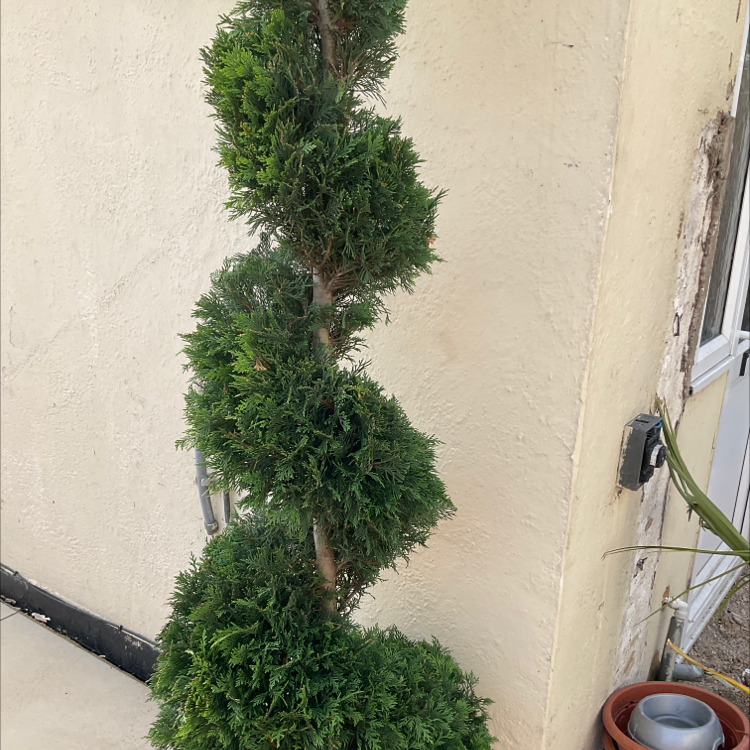
Emerald Green Arborvitae does best in a large, deep pot made of wood, unglazed ceramic, or a thick plastic planter with drainage holes. Start with a pot at least 18 inches wide for an established plant. These evergreens need root insulation in winter, so pot material matters in cold zones.
What Size Pot Does an Emerald Green Arborvitae Need?
Emerald Green Arborvitae has a compact, fibrous root system that goes moderately deep. Choose a pot at least as deep as it is wide, giving the roots room to anchor the upright growth. A pot that is too small dries out fast and cannot support the tree in wind.
When sizing up, go 3-4 inches wider than the current container. Arborvitae are slow to moderate growers, so you will not need to upsize every year. Once you reach an 18-24 inch pot, you can maintain the tree there for several years with annual top-dressing.
A pot that is too large holds excess moisture in cold weather, which is risky for roots that are already stressed by winter temperatures. Match the pot to the current root mass and size up as needed.
Young plant (1–2 ft)10–14" pot
Established tree (2–4 ft)14–18" pot
Mature specimen (4–8 ft)18–24" pot or planter
Large privacy screen specimen24–30" pot or half barrel
What Material Pot Is Best for Emerald Green Arborvitae?
Arborvitae roots need consistent moisture and protection from temperature extremes. Because this evergreen is hardy down to zone 2a, it often lives outdoors through harsh winters. The pot material must insulate the roots from freeze-thaw cycles that can crack containers and damage root tissue.
Breathability matters too. The fibrous root system benefits from some air exchange through the pot walls, which prevents the soggy conditions that lead to root rot in cold, wet winter soil.
Dries fastest → Slowest
Best for Arborvitae
Fabric
Excellent breathability and root air-pruning. Wrap with burlap in winter to add insulation in cold zones.
Unglazed Ceramic
Breathes well and holds moisture. Be aware that terracotta can crack in hard freezes if not frost-rated.
Wood
The best choice for cold climates. Natural insulation protects roots through winter and the wood breathes well.
Glazed Ceramic
Looks great on a patio. Choose a frost-rated glazed pot if you are in zones below 6 to prevent cracking.
Plastic
Lightweight and will not crack in frost. Thick-walled resin planters offer decent insulation. A practical choice.
MetalOVERHEATS
Conducts heat and cold equally. In summer sun it cooks roots, and in winter it transmits freezing temperatures directly.
Emerald Green Arborvitae is a cold-hardy evergreen, so root insulation matters more than usual. Wood is the best choice for cold climates because it naturally buffers roots from freezing temperatures and breathes well year-round. Fabric works too, especially if you wrap it with burlap in winter.
Avoid metal pots. Metal conducts both heat and cold, cooking roots in summer sun and transmitting freezing temperatures in winter. If you use ceramic, make sure it is frost-rated for your zone to prevent cracking.
Stay on top of plant care
Get seasonal reminders for watering and fertilizing — personalized for your plants.
Does My Emerald Green Arborvitae Need Drainage Holes?
Yes. Arborvitae need consistent moisture but are susceptible to root rot when water sits at the bottom of the pot, especially in winter when the tree is not actively drinking. Good drainage prevents the waterlogged conditions that kill container evergreens.
Elevate the pot slightly off the ground on pot feet or bricks. This keeps the drainage holes from sitting in a puddle of snowmelt or rain and improves airflow under the pot in winter.
When Should I Repot My Emerald Green Arborvitae?
Arborvitae grow at a slow to moderate pace and typically need repotting every two to three years when young. Mature trees in large containers can stay put for years with annual top-dressing of fresh soil.
Repot in early spring before new growth starts. Gently loosen any roots circling the edge of the root ball. If the tree has been in the same pot for a long time, you may need to score the outer roots with a clean knife to encourage fresh outward growth.
Use a well-draining potting mix formulated for trees or shrubs. A blend with bark, perlite, and compost holds moisture while providing the structure that supports an upright evergreen.
Signs It's Time to Repot
Roots circling at the surface or out of drainage holes
Tree dries out within a day or two of watering in summer
Foliage browns at the tips despite adequate watering
Tree becomes unstable or leans in the pot
Growth slows noticeably over consecutive seasons
When Can I Plant My Emerald Green Arborvitae in the Ground?
Emerald Green Arborvitae is hardy in zones 2a through 7b and is ideally suited for in-ground planting. Transplant in early spring or early fall when temperatures are mild. Choose a spot with full sun to partial shade and well-drained soil. These trees are commonly used as privacy screens and hedges.
Because arborvitae are so cold-hardy, there is no climate too cold for in-ground planting within their zone range. Container growing is usually a choice for patios, balconies, or rented spaces rather than a necessity. If you have the option, planting in the ground gives the roots more insulation and moisture stability than any pot can provide.
Got More Questions?
Can I grow Emerald Green Arborvitae in a pot without drainage holes?
No. Standing water at the bottom of a sealed pot will rot the roots, especially in winter when the tree uses less water. Always use a pot with drainage and elevate it off the ground to prevent pooling.
How do I know if my Arborvitae pot is too big?
If the soil stays wet for more than two weeks after watering, especially in cooler weather, the pot is too large. Excess wet soil in winter is particularly dangerous for cold-climate container evergreens.
How do I protect a potted Arborvitae in winter?
Wrap the pot in burlap or bubble wrap for insulation. Move it against a sheltered wall. Water lightly on above-freezing days since winter desiccation is a bigger threat than cold for arborvitae. Elevate the pot to prevent it from freezing to the ground.
Can I keep Emerald Green Arborvitae on a sunny balcony?
Yes, as long as the pot is large enough (at least 18 inches) and you water consistently. Wind exposure on a balcony dries the foliage quickly, so monitor moisture closely in summer and shield from drying winter winds.
Will my potted Arborvitae grow as tall as one planted in the ground?
No. Container arborvitae typically reach about half the height of in-ground specimens. Expect 6-8 feet in a large pot versus 12-15 feet in the ground. The restricted root space naturally limits the top growth.
Stay on top of plant care
Get seasonal reminders for watering and fertilizing — personalized for your plants.
Kiersten Rankel holds an M.S. in Ecology & Evolutionary Biology from Tulane University. A certified Louisiana Master Naturalist, she has over a decade of experience in science communication, with research spanning corals, cypress trees, marsh grasses, and more. At Greg, she curates species data and verifies care recommendations against botanical research.
See Kiersten Rankel's full background on LinkedIn.
Editorial Process
Container guidance verified against Thuja occidentalis growth data from Greg's botanical database, cross-referenced with USDA hardiness zone data and published horticultural research.