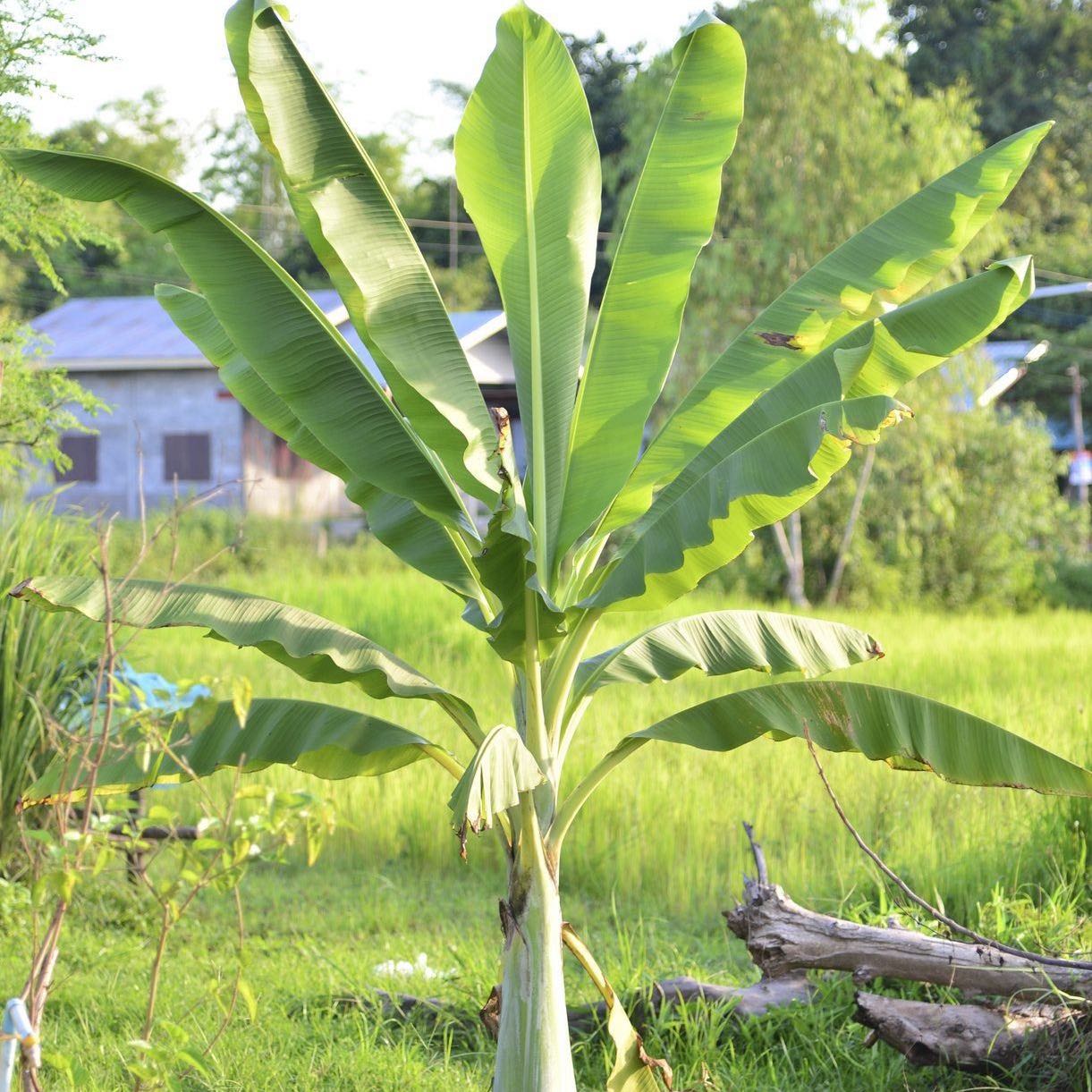
Banana

How to Fertilize Banana

Musa acuminata
Reviewed by Kiersten Rankel M.S.
Quick Answer
Banana plants are among the heaviest feeders in the garden. Use a balanced to high-potassium fertilizer (like 8-10-8 or 3-1-6) every 2 to 4 weeks during the growing season. Stop feeding in late fall and winter when growth slows. Always water deeply before applying.

When Should I Start Feeding My Banana Plant?

Your feeding window depends on your local frost-free season, since banana plants are outdoor growers in zones 9a through 11b and go dormant in cold weather.

US feeding regions map
Pacific Feb–Nov
Mountain Jun–Sep
Midwest May–Sep
Northeast May–Sep
Southeast Mar–Nov
Stay on top of plant care
Get seasonal reminders for watering and fertilizing — personalized for your plants.
Try Greg Free

How Often Should I Fertilize My Banana Plant?

During the growing season (spring through early fall), feed your banana plant every 2 to 4 weeks. In-ground plants in warm climates can handle biweekly feeding. Container bananas or those in cooler regions do better with feeding every 3 to 4 weeks.

Taper off in early fall with one final half-strength application. Stop fertilizing entirely from late fall through winter. Even in mild climates, banana plants slow their growth significantly during shorter days.

If the lower leaves turn yellow and papery during the growing season, the plant needs more frequent feeding or a higher dose. This is normal leaf turnover, but it accelerates when nutrients are limited.

Feeding Calendar
Spring
Full-strength granular every 3-4 weeks as new leaves unfurl
Summer
Full-strength every 2-3 weeks during peak growth
Early Fall
One final half-strength feeding, then stop
Late Fall & Winter
No feeding while the plant is dormant

What Is the Best Fertilizer for Banana Plants?

Banana plants need lots of potassium to support their large leaves and eventual fruiting. The ideal NPK ratio is one with strong potassium, such as 8-10-8 or 3-1-6. They also benefit from extra magnesium, which prevents the yellow streaking between leaf veins that bananas are prone to.

A granular slow-release fertilizer works best for in-ground banana plants. Apply it monthly and let rain or irrigation carry the nutrients to the roots. For container bananas, a liquid fertilizer diluted to full or half strength every 2 weeks gives you better control.

Banana plants are not picky, but they are hungry. Underfeeding is a much more common problem than overfeeding with this species. If growth stalls or leaves stay small, the plant almost certainly needs more food.

Synthetic
Granular slow-release with micronutrients. Apply around the base every 4 to 6 weeks. Works well for banana plants despite the citrus label.
Simple balanced granular that banana plants respond well to. Apply 1/2 to 1 cup per plant every 3 to 4 weeks.
Organic
Organic granular with beneficial microbes. Apply a generous handful around the base every 4 to 6 weeks.
Liquid organic blend rich in trace minerals. Dilute 1 tablespoon per gallon and apply every 2 weeks during peak growth.

How Do I Fertilize My Banana Plant?

1
Water the root zone deeply
Soak the soil around the base of the plant a day before fertilizing. Banana roots are shallow and spread wide, so water a circle at least 2 feet out from the pseudostem.
2
Measure a generous dose
Banana plants are heavy feeders. For granular fertilizer, use 1/2 to 1 pound per application for a mature plant. For container bananas, use full-strength liquid fertilizer, about 1 tablespoon per gallon.
3
Spread around the base
Scatter granular fertilizer in a wide ring starting 6 inches from the pseudostem and extending 2 to 3 feet out. For liquid feeding, pour the solution across the entire root zone.
4
Water in thoroughly
Give the area a deep soaking to dissolve the granules and carry nutrients down to the roots. Banana plants love water, so do not hold back here.
5
Top with compost or mulch
Add a 3 to 4 inch layer of compost or mulch over the fertilized area. This feeds the soil biology, retains moisture, and gives the banana extra organic nutrition as it breaks down. Keep mulch away from the pseudostem to prevent rot.

Got More Questions?

Can I use coffee grounds on my banana plant?
Yes, banana plants tolerate used coffee grounds well when mixed into compost or mulch. They add organic matter and a small amount of nitrogen. But they do not provide the high potassium that bananas need most, so use them as a supplement.
What happens if I over-fertilize my banana plant?
Over-fertilizing a banana plant is less common than with other species, but it can cause leaf tip burn and brown edges. If you see salt crust on the soil, flush with deep watering and skip one feeding cycle.
Why are my banana plant's lower leaves turning yellow?
Some lower-leaf yellowing is normal. Banana plants shed their oldest leaves regularly as new ones emerge from the top. If it is happening rapidly or reaching the upper leaves, the plant likely needs more fertilizer or water.
Can I use banana peels to fertilize my banana plant?
There is a certain poetry to it, but banana peels decompose far too slowly in soil to deliver meaningful potassium. Composting them first helps, but a proper fertilizer will always be more effective and reliable.
Should I fertilize my banana plant during winter?
No. Even in mild climates, banana plants slow their growth significantly during the shorter days of winter. Feeding during dormancy wastes fertilizer and risks salt buildup in the soil.
Stay on top of plant care
Get seasonal reminders for watering and fertilizing — personalized for your plants.
Try Greg Free

About This Article

Kiersten Rankel M.S.
Botanical Data Lead at Greg · Plant Scientist
About the Author
Kiersten Rankel holds an M.S. in Ecology & Evolutionary Biology from Tulane University. A certified Louisiana Master Naturalist, she has over a decade of experience in science communication, with research spanning corals, cypress trees, marsh grasses, and more. At Greg, she curates species data and verifies care recommendations against botanical research.
See Kiersten Rankel's full background on LinkedIn.
Editorial Process
Fertilizer recommendations verified against Musa acuminata growth data from Greg's botanical database, cross-referenced with USDA hardiness zone data and published horticultural research.
4,236+ Greg users growing this plant
USDA hardiness zones 9a–11b